Fire safety systems play a crucial role in safeguarding lives and properties during fire incidents and related emergencies. Though regular maintenance is essential for smooth functioning and immediate use, mere installation of the fire safety system won’t be enough. They require routine inspections, testing, and servicing, for seamless performance and effectiveness during a serious fire incident.
An Annual Maintenance Contract (AMC) is an important annual agreement that helps maintain compliance with safety standards, guidelines, and timely identification of potential problems in the fire safety system. As a pillar of human responsibility to safety, it keeps fire protection systems fully operational and deployment-ready when needed.
What Is an Annual Maintenance Contract (AMC) in Fire Safety?
Annual Maintenance Contract (AMC) is a service agreement, usually covering for a year, between a property owner and a fire safety provider for regular inspection, testing, and the maintenance of fire protection equipment like fire alarms, extinguishers, hydrants, sprinkler systems, etc. In simple words, AMC is the cornerstone of effective fire safety maintenance, that ensures your fire equipment is reliable and operational throughout the year.
Commercial buildings, offices, hospitals, factories, schools, and apartments depend on reliable fire protection systems to keep people, property, and business operations safe. With regular checks and preventive maintenance being carried out occasionally, an AMC can map out potential dangers like damaged or malfunctioning components, identify performance issues, and repair required parts before they escalate into a major threat.
A well-maintained AMC checklist maintains compliance with fire safety standards and regulatory requirements. It’s a document of proof that verifies equipment inspection and service with adherence to recommended procedures.
Annual Maintenance Contract Checklist in Fire Safety
Fire Extinguisher Inspection
Fires could break out without prior-warning, which is why it’s important to have deployment-ready equipment and protective measures.
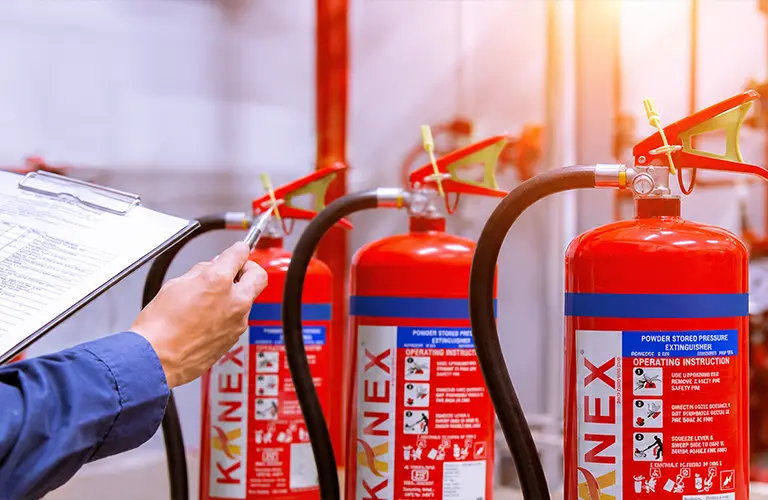
- Check pressure gauge to have an idea of the extinguisher’s operating pressure.
- Carefully inspect and examine the device for any issues regarding its physical condition, like damage, corrosion, or leakage.
- Confirming the expiry date of the device and its service validity.
- Inspecting the device’s safety pin, seal, and mounting.
- Identifying replacement or refill requirements.
Fire Alarm System Testing
Fire alarm systems are quick response alert systems that provide early warning trigger instantly when there’s a fire/smoke. This early warning facilitates faster evacuation and occupant response.
The maintenance and testing should be carried out for the following devices –
- Smoke detectors
- Heat detectors
- Manual call points
- Alarm sounders
- Fire alarm control panel functionality.
Testing ensures that the alarm systems, which include detection, notification, and control panels, all function effectively.
Fire Hydrant System Inspection
Fire hydrants play a crucial role during firefighting incidents, supplying high-volume water to firefighters for immediate response and fire containment.
The fire hydrant has mainly 5 essential areas for inspection –
- Hydrant valves – Checked to ensure they open, close, and operate properly during emergencies.
- Hose reels – Inspecting potential leaks and damages to fix and ensure smoother firefighting operations.
- Nozzles – Check for uninterrupted water discharge, blockages, and damage.
- Water pressure – Examining the pressure levels to meet the necessary levels for firefighting.
- Leakage inspection – General inspection to ensure system efficiency.
Sprinkler System Maintenance
When activated, the automatic sprinkler system provides immediate response for swift fire suppression. The maintenance should mainly include –
- Sprinkler head inspection to identify any blockages or damages.
- Conduct a water flow test to measure the amount of water a pipe or system can deliver.
- Check the condition of the pipe and its functionality.
- Examining control valves and checking if they’re easy to operate.
- Testing the Pump operation
Fire Pumps Testing
Fire pumps are very crucial to maintaining water pressure in firefighting systems. AMC checklist inspections must include it and ensure the following parts:
- Main fire pump testing – The ability of the main pump to deliver the right water pressure and flow to the system, quickly assisting the firefighting team.
- Jockey pump performance checks – Check the jockey pump’s ability to maintain system pressure and prevent unwanted activations.
- Diesel pump testing (where installed) – Makes sure they are functional and can be switched on and off without trouble during a fire incident.
- Automatic start and operation testing – Check and confirm the self-activation of fire pumps the second a drop in water pressure is detected.
- Pressure performance verification – Measures pump pressure output that is in alignment with the industry’s required firefighting standards.
- Proper pump maintenance – Ensures continuous water availability during fire emergencies and immediate use.
Emergency Exit & Safety Sign Inspection
During a fire emergency, it’s very important to clearly guide people with a safe route out to safety. These clear evacuation signals must be maintained to help people act quickly, without panicking.
- Check that the visibility and placement of exit signs are ideal.
- Ensure emergency and backup lighting systems are operational to guide people during a power failure.
- Clear obstacles from escape routes while making them spacious and accessible.
- Verifies the visibility of safety signs during smoke or low-light conditions and sets up illuminated safety signs.
An organized and properly maintained emergency guidance system helps occupants evacuate safely and move with clarity and less panic during an incident.
Fire Doors and Safety Equipment
Fire doors and related safety equipment assist in slowing down the fire spread and smoke between different areas of a building.
Inspection should cover:
- Fire door closing mechanisms
- Door seals
- Panic bars
- Overall condition of emergency equipment
Any damaged or faulty components should be repaired or replaced immediately without delay. This is a responsibility which should show no compromise, under any circumstances.
Documentation and Service Reports
Proper adherence to safety standards means having proper documentation and proof of validation.
- Maintain proper records of inspection and observations made.
- Record maintenance logs, including servicing activities, previous maintenance works, and equipment checks.
- Keep proper documentation of repairs performed, equipment replaced, and faults identified in every inspection performed.
- Provide genuine and valid proof that fire safety systems are compliant and meet the required standards and regulations.
- Potential issues and problems are marked and included in future service recommendations.
- Detailed reports help organizations track equipment performance and fire protection systems and plan timely maintenance activities.
Conclusion
From this blog, it’s clear that fire safety is not limited to the installation of protective equipment alone. Regular inspection processes, system testing, and servicing are very important to ensure seamless firefighting capabilities when lives and properties are at stake. With a comprehensive Annual Maintenance Contract checklist in fire safety, organizations can be well-equipped, better prepared, compliant, and reduce potential threats arising from fire incidents.
Safetik, a leading firefighting company in Kerala, provides professional and reliable fire safety solutions designed to support businesses and properties with meticulous inspections, maintenance services, and quality safety equipment.
As a trusted provider of fire and safety products online, we are known for helping organizations improve workplace safety through the effective facilitation of fire prevention and preparedness. Partnering with reputed fire extinguisher dealers in Kerala ensures expert guidance, quality servicing, and long-term reliability for your fire protection systems.