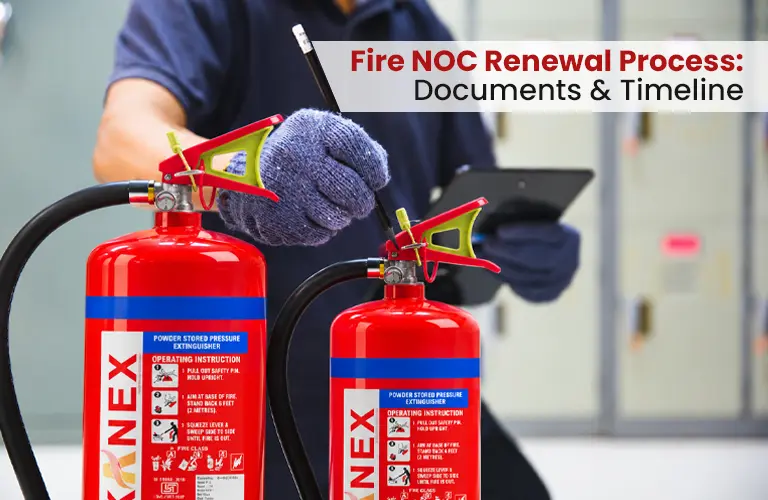
Fire NOC Renewal Process: Documents and Timeline

Fire safety compliance is a perpetual responsibility that should be maintained in every property, workplace, or living environment. For businesses, hospitals, schools, industries, commercial buildings, and other properties, maintaining a valid Fire NOC is an essential aspect of meeting applicable fire safety requirements. 

But by working with a reliable firefighting company in Kerala like Safetik, property owners can protect their property while responsibly maintaining fire protection systems and staying renewal-ready. This blog will cover the Fire NOC renewal process, the documents required, and the expected timeline to help avoid last-minute delays and make the renewal process smooth. 

When Should You Renew a Fire NOC? 

  • The validity period of a Fire NOC and its renewal requirements depend on various factors like property type, local regulations, and the concerned authority.
  • Property owners should mandatorily check the expiry date of their existing certificate and begin the Fire NOC renewal procedure as needed, preferably in advance.
  • Delaying until the last minute can prove costly, as there won’t be enough time for inspection, rectifying deficiencies, updating documents, or obtaining approval.
  • Starting early gives property owners enough time to address any issues before the existing NOC’s expiry and be future-ready when the time comes.  

Fire NOC Renewal Process 

The Fire NOC application process generally has multiple steps, with specific requirements differing according to the authority and property.

Check the Existing Fire NOC

  • Review the current fire NOC, expiry date, and conditions mentioned in the previous approval. 
  • Check whether the property has gone through any structural, occupancy, or usage changes.

Inspect Fire Safety Systems

  • Before applying, carefully inspect the property’s fire protection arrangements.
  • Check all the fire safety measures installed in your property, including all the fire extinguishers, alarms, smoke detectors, hydrants, sprinklers, emergency exits, exit signs, emergency lighting, and other required systems.

Prepare the Required Documents

  • Collect the necessary documents for renewal.
  • Ensure that the information provided is accurate and updated.
  • Missing or incorrect documentation can cause unnecessary delays.

Submit the Renewal Application

  • Submit the renewal application to the responsible fire and rescue authority and pay applicable fees, if any.
  • Note down the application or reference number for future tracking.

Fire Safety Inspection

  • The concerned authority will inspect the property to verify it is compliant with the legal framework and has proper fire safety arrangements.
  • Inspectors may check equipment, emergency access, exits, signage, and other applicable safety measures.

Complete Required Corrections

  • If potential issues or deficiencies are identified, then those issues must be promptly rectified.  
  • This may involve repairing or replacing faulty equipment, improving emergency exits or signage, or submitting additional documents and compliance reports.

Receive the Renewed Fire NOC

  • Once all applicable criteria and requirements are met, the responsible authority can issue the renewed Fire NOC.  
  • Make sure to safely store both physical and digital copies of the NOC for future reference and compliance records. 

Documents Required for Fire NOC Renewal 

Document requirements vary based on location, property type, and the governing authority responsible for handling it.

The most commonly requested documents may include: 

  • Existing or previous Fire NOC
  • Fire NOC renewal application
  • Approved building plan or layout 
  • Occupancy certificate, where applicable
  • Fire safety system details 
  • Fire equipment maintenance/service certificates 
  • Electrical safety certificate, where applicable 
  • Structural stability certificate, where applicable
  • Ownership or tenancy documents
  • Building owner/occupier details
  • Fire safety inspection or compliance report
  • Other documents requested by the local authority 

How to Prepare for a Fire NOC Renewal 

Proper preparation can streamline the Fire NOC renewal process significantly. It’s strongly recommended to start it before the current NOC expires and also make sure to run an internal fire safety inspection. 

Regularly service and test the fire protection equipment, keep proper records of the service history, organize the required documents, and check whether the emergency exits and fire safety signage are perfectly visible, clear, and in accordance with current standards. Maintaining essential fire safety equipment and supplies throughout the year can be highly useful and instrumental in the long run. 

Businesses can source suitable equipment and related products through trusted Fire and Safety Products online providers while ensuring that the products are in compliance with general standards and meet the applicable requirements. 

Conclusion 

A timely Fire NOC renewal procedure helps property owners remain compliant with essential fire safety requirements and avoid unnecessary delays. The Fire NOC application process can be made much smoother, provided there is proper documentation, regular maintenance, and early preparation. 

Since the process may change over time, the applicants must confer with the relevant local fire authority and confirm the latest procedures first. Starting early and not leaving it until the end is the easiest way to ensure sufficient time for inspection, corrections, documentation, and approval. 

At Safetik, a premier firefighting company in Kerala, we understand the importance of reliable fire safety solutions for businesses and properties, as we strive to set the highest bar of safety to safeguard properties and the environment alike. From fire safety equipment to professional support, our cardinal goal is to ensure customers cultivate safe, fully compliant environments.  

Explore Safetik’s solutions and services to support your property’s fire safety needs. 
The Importance of Fire NOC for Building

Fire NOC is a document issued by the local fire safety authority after inspecting a building. It certifies that the building meets all necessary fire safety regulations and follows all prescribed fire safety standards and regulations.

The fire NOC verifies that a building is equipped with all fire safety products including fire extinguishers, alarms, sprinklers, smoke detectors, etc. It is mandatory for every type of building such as schools, hospitals, theaters, malls, etc.

Obtaining a fire NOC makes sure that you follow all regulatory compliance and is often required for getting approval for various types of buildings.

What is a fire NOC?

As mentioned earlier, a fire NOC for building is a legal document issued by the fire department to endorse that the building has met all the necessary safety standards. It ensures the safety of occupants by verifying the implementation of fire prevention measures in the building.

Submitting an application for a fire NOC along with the required documents is crucial for obtaining one. Building plans and layouts, construction details, ownership and authorization documents, fire safety system details, compliance certificates, application forms, and site photographs are required for receiving a fire NOC.

Importance of a fire NOC for buildings

Safety assurance

A fire NOC for a building guarantees that it complies with the fire safety regulations set by the local fire department. You have to set up fire safety systems such as extinguishers, alarms, and sprinklers along with emergency exits for acquiring a fire NOC.

Also, the fire NOC plays an important role in preventing fire hazards and ensuring occupant safety. The inspection conducted by the fire department to issue NOC helps you identify and eliminate risk, prepare for emergencies, and reduce casualties and property damage.

Regulatory compliance

Complying with local fire safety regulations is crucial to ensuring the safety of occupants. This reduces fire risks and prepares you for emergency situations by equipping yourself with fire prevention and control systems. These safety measures help to build the trust of employees and customers.

Legal consequences of operating without a fire NOC include fines and penalties, operational risks, legal actions, reputational damage and even the immediate shutdown of operations. More than a regulatory requirement, a fire NOC is a step towards ensuring a safe and legally compliant environment.

Insurance and financial implications

A fire NOC is mandatory to receive insurance claims smoothly without any delay if any fire incident takes place. Insurance companies require a fire NOC to process the claim. Otherwise there are high chances of the insurance claim getting rejected. The fire NOC shows that the owner has taken necessary safety measures to reduce liability and thereby claim insurance. Buildings with a fire NOC are considered prone to fire incidents, leading to reduced insurance premiums.

Fire NOC has several financial benefits including reduced damage costs, avoidance of fines, etc. Effective fire prevention systems minimize property damage during fire accidents and compliance with safety norms eliminates fines for not following safety measures. Regular maintenance of fire safety systems, as demanded by the Fire NOC, prevents costly repairs or replacements.

Building occupancy approval

A fire NOC is mandatory for obtaining occupancy and operational permits for any building. It ensures that the building complies with fire safety standards, keeping people and assets safe. Fire NOC assures that the building is equipped with fire prevention, detection, and control systems. It also serves as proof that the building adheres to fire safety laws. Fire NOC is issued only to buildings that have emergency exits or fire escape routes. Many businesses get approval only if they possess a fire NOC certificate.  


Applications for fire NOC are essential for all types of buildings including residential, public, commercial, institutional, etc. It is to testify that a building complies with the safety regulations. Obtaining a fire NOC for buildings has many benefits such as safety assurance, regulatory compliance, insurance and financial implications, and building occupancy approval. Overall, a fire NOC ensures safety, compliance, and operational efficiency.  

Safetik is the leading company that offers fire and safety services in Kerala. They deliver a range of services including fire hydrants, gas suppression, sprinkler systems, fire detection and alarm systems, fire extinguisher systems, etc. Apply for a fire NOC irrespective of the type of building to ensure safety and compliance. Contact us now for the expert service we offer and protect your building and people from fire incidents.

Types Of Fire NOC

A fire NOC (No Objection Certificate), also known as a Fire Safety Certificate is a document issued by the local fire department or the regulatory authority. It stands as a testament that a building or facility has met all the fire safety standards and regulations set forth by authorities.

Before issuing the certificate, the fire department inspects the area to make sure that it complies with specific fire safety criteria. These criteria include the presence of fire safety products among other necessary safety measures.

 Why are fire NOCs important?

Fire NOCs are important because they ensure the safety of the people in a building at the time of a fire. The NOC certifies that the building has complied with the necessary fire resistant features such as fire alarms, fire extinguishers, emergency evacuation plans etc. Fire NOCs are critical not only for the safety of occupants but also for obtaining approvals for construction, occupancy, and business operations.

Fire NOCs based on building and usage

Each type of building requires different types of fire NOC. Let’s discuss them.

Residential fire NOC

Residential buildings such as apartments require a fire NOC to ensure compliance with fire safety regulations. A fire NOC is required during the construction phase or before occupancy to ensure that the building is safe.

Fire exits and staircases, smoke detectors and alarms, firefighting equipment, emergency lighting etc consist of the safety standards required for residential buildings.

Commercial fire NOC

Fire NOC for commercial buildings such as offices and malls is to ensure compliance with fire safety regulations and to create a safe environment for employees and visitors. This ensures that the building is equipped with fire detection and prevention systems to handle emergency situations effectively.

Fire detection and alarm systems, sprinkler systems, fire extinguishers, emergency exits, evacuation plans etc are the fire safety measures required for commercial properties.

Industrial fire NOC

Industrial facilities have specific fire safety requirements due to the presence of high-risk elements such as flammable materials and hazardous chemicals. The chance of fire-related accidents is very high.

Flammable substances, overloaded circuits, chemical hazards, heat generating equipment, limited emergency exists etc are the reasons for common fire hazards in industrial setups. NOCs can address these hazards by ensuring proper storage facilities, regular maintenance of electrical systems, heat-resistant materials etc.

Institutional Fire NOC

Institutions such as schools and colleges, hospitals and healthcare centres require an institutional fire NOC before starting work. These institutions must ensure the safety of students, teachers, doctors, and patients by providing a fire safety environment with proper evacuation plans and fire-resistant construction.

Additional safety considerations in these institutional settings include fire resistant doors and walls, conducting regular fire drills, automatic alarms, sprinkle systems and backup power systems.

Fire NOCs based on facility requirements

Based on facility requirements, fire NOC types are two – temporary and permanent.

Temporary fire NOC

A temporary fire NOC is required for short term programmes such as exhibitions, public events, construction sites etc, where fire safety is a concern. There will be large crowds and therefore it is essential to ensure their safety through fire management measures.

In order to obtain a temporary fire NOC, you have to submit an application to the local fire department along with the relevant documents. The fire department officials inspect the site and if the site adheres to the safety standards, then the NOC is issued after you pay the required fee.   

Permanent fire NOC

A permanent fire NOC is issued for long-term establishments such as residential complexes, commercial and institutional buildings, and industrial facilities. It certifies that a building complies with safety standards. Permanent NOCs are issued for the long-term to ensure legal compliance and occupant safety.

Even though a permanent NOC is issued for long-term use, periodic renewals are required to maintain it. After the inspection of the fire department, you have to submit the updated documents and an application for renewal. A renewed certificate will be issued after verification.

Fire NOC categories based on fire hazard level

The degree of fire NOC varies based on fire hazard level and they can be categorized into three.

Low-risk fire NOC

A low risk fire NOC applies to buildings that have less chance of fire hazards. It is due to the types of operations taking place and the materials used. Small residential buildings, offices, educational institutions, warehouses for non-flammable goods and health clinics are the buildings and facilities that fall under low-risk.

Requirements for a low-risk NOC include basic fire safety equipment, building with features such as minimum two fire escapes, ventilation facilities, water supply, proper evacuation plan etc. 

Moderate-risk fire NOC

A moderate-risk fire NOC is required for industries and commercial spaces with moderate fire hazards. It is due to high occupancy levels and the complexity of operations used. Medium-sized manufacturing companies, commercial buildings such as malls, offices, restaurants, health and educational institutions with capacity above the low-risk category fall under moderate-risk.

Fire safety equipment, buildings with fire resistant walls, ceilings and multiple fire exits, safe storage practices for flammable materials etc are required for a moderate-risk fire NOC.

High-risk fire NOC

A high-risk fire NOC is mandatory for industries and facilities with substantial fire hazards. It is due to the high complexity of operations, materials handled, or occupancy density. Industries and setups with high fire hazards include chemical and petrochemical plants, heavy manufacturing industries and large commercial and residential complexes.

Specific safety protocols include fire protection systems, fire detection and alarm systems, emergency exit and evacuation plans, ventilation and smoke control. Inspection and approval processes include preliminary risk assessment, fire department review and on-site inspection before the NOC is issued.


NOCs are critical documents issued by fire departments to certify that a building or facility complies with fire safety standards. There are different types of fire NOC and they vary based on building, facility requirements and fire hazard level. NOC’s are important to ensure the safety of lives and property and for legal compliance. Compliance with fire safety standards demonstrates a commitment to safety and responsibility, which builds trust among people. Safetik provides the best fire and safety services in Kerala, ensuring safety and security across various sectors.

×