How Fire Suppression Systems Reduce Downtime

Fire accidents are unprecedented accidents that can bring businesses to an abrupt halt, leading to operational disruptions and financial losses. Even the smallest spark could lead to a fire that ends up damaging expensive products, destroying important documents, affecting production, and even compromising the safety of a workplace. 

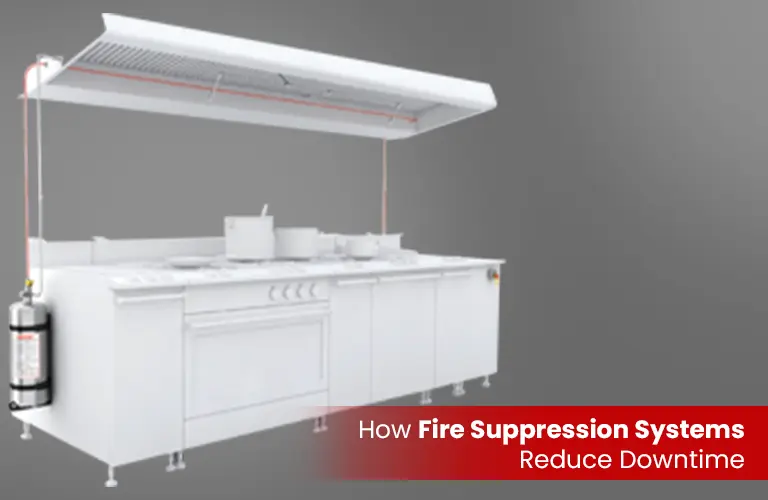
A professionally designed advanced fire suppression system provides swift and seamless response through early detection and control of fires before they flare up. By minimizing damage and preventing longer shutdowns, these highly useful fire systems help businesses reduce service interruptions (downtime), protect valuable assets, and resume normal operations immediately. 

In this article, we will help you understand how fire suppression systems help reduce downtime and why it’s essential for all businesses.  

What Does Business Downtime Mean?  

Business downtime is a period of total inactivity where organizations cannot operate at all due to unexpected events like fire. During this time, the entire business halts its essential functions; employee workflow is temporarily stalled, and customers might face delays in service or product delays.  

The impact of downtime can include: 

  • Production and manufacturing delays 
  • Lost sales and reduced revenue 
  • Employee productivity interruptions 
  • Costly equipment repairs or replacements 
  • Customer dissatisfaction 
  • Reputational damage 

Even a fraction of time lost can inflict financial consequences upon the business, making fire protection an extremely essential aspect for business continuity. 

How Fire Suppression Systems Help Reduce Downtime  

Detect Fires Early 

  • Modern fire detection systems utilize highly advanced sensors to identify smoke, heat, or flames almost immediately after its formation.  
  • When a danger is detected early, immediate action can be taken to prevent the fire from flaring out to other places or buildings.  
  • This swift response helps contain hazardous escalations effectively while avoiding prolonged operational disruptions.  

Control Fires Automatically 

  • Modern technology has evolved automation to a point where manual action has less burden in deescalating issues.  
  • The sensors get triggered, and the system instantly responds automatically – all without manual intervention.  
  • This rapid response minimizes damage to equipment, inventory, and property while reducing further repairs. 

Protect Critical Equipment 

  • Most businesses rely on extremely valuable assets like servers, electrical panels, manufacturing machinery, communication systems, and other valuable assets.  
  • That’s why they install highly effective fire suppression systems that control the fire from escalating before they severely damage the assets.  
  • Preserving essential equipment helps businesses control the need for excessive repairs and lengthy replacements while enabling operations to move seamlessly with minimal interruption. 

Minimize Business Interruptions 

  • Swift containment helps facilitate faster cleanup and restoration. 
  • This helps limit the damage through fewer repairs, reduced operational delays, and a quicker resumption of business activities, minimizing revenue loss, and maintaining customer confidence without further escalation. 

Improve Employee Safety 

  • During a fire emergency, human safety is the no. 1 priority. Businesses should make sure to buy fire suppression systems that are highly effective and installed optimally. 
  • An effective fire suppression system creates a safe workplace, reassuring the employees, and effectively controls fires rapidly without excessive exposure to dangerous smoke and flames.  
  • Protecting employees not only prevents injuries but also allows businesses to recover and resume operations more efficiently after the emergency.  

Additional Benefits Beyond Reducing Downtime  

The benefit of investing in a fire suppression system lies in its ability to control hazardous fire incidents and minimize operational interruptions effectively before they escalate into worser issues. 

Some of the most useful benefits are – 

  • Protects valuable business assets, inventory, equipment, and other essential resources. 
  • Early prevention or immediate response can reduce repair costs, replacement, and restoration costs.  
  • Supports business continuity and initiates disaster recovery significantly faster.  
  • Makes organizations responsible and compliant with fire safety regulations and industry standards. 
  • Build customer trust and boost their confidence by showcasing your commitment to safety. 
  • May help in the reduction of insurance risks and insurance premiums. 
  • Improves workplace safety and operational resilience, making dangers more manageable. 

Conclusion  

Fire suppression systems deserve more credit than what people give them credit for. They play a vital role in reducing business downtime through early detection and the controlling of fires before they flare up into a worse incident.  

This rapid response is the cornerstone of workplace safety that safeguards employees, valuable equipment, critical infrastructure, and business operations, enabling fast recovery and containing financial losses.   

At Safetikwe prioritize reliable fire suppression solutions that are ideally tailored to the unique needs of commercial, industrial, and institutional facilities more than anything. From the initial design of the system, its installation, testing, and maintenance, to the continuous support provided by our team, we strive to help businesses maintain a safe environment and ensure uninterrupted operations. 

That’s why it’s very important to invest in the right fire and safety products onlinelike with Safetik, a trusted firefighting company in Kerala, where reliable fire safety solutions are served to help reduce downtime and keep your operations running. 

Why Regular Fire Extinguisher Inspections Are Essential

Fire safety is a critical responsibility for protecting both people and property alike. It requires a proactive approach, as emergencies could occur unexpectedly and without warning at any time. Being prepared with the right fire protection equipment means you are capable of quick response, limiting the danger on people, property, and the surrounding environments.  

However, simply installing a fire extinguisher is not enough; it’s an ongoing responsibility that should be taken seriously. Partnering with a trusted firefighting company in Kerala like Safetik, helps ensure your equipment remains service-ready and fully functional when it matters most. 

A neglected or faulty extinguisher can pose a serious danger, especially if it fails to work effectively during emergencies, threatening life and property alike. In this blog, we’ll explore the fundamentals of fire extinguisher inspections, and why they are extremely crucial for maintaining a safe and secure environment.  

What Is a Fire Extinguisher Inspection?  

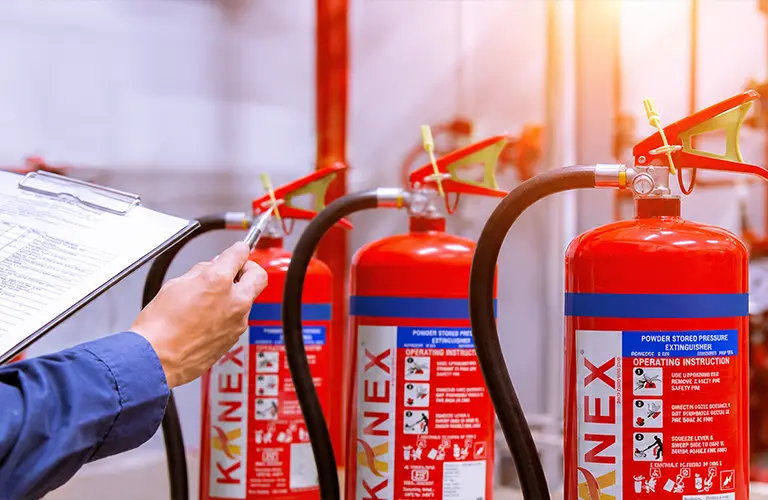
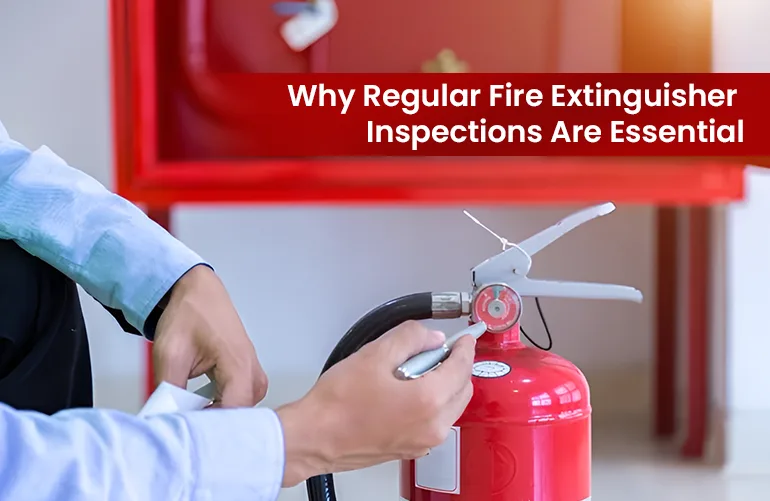
A fire extinguisher inspection basically is a routine examination conducted on fire extinguishers to verify its functionality – whether it is in proper working condition and ready for immediate use. These essential inspections help identify potential issues such as damage, leaks, missing components, or low pressure that could drastically affect performance in the face of an emergency. 

Basic inspections are generally carried out every month by a team of safety personnels or designated staff, who are well versed in the equipment and field. Additionally, to ensure safety standards and regulation of compliance, annual inspections and maintenance should be performed by trained professionals without fail. Such proactive measures and compliance with fire safety standards can make all the difference during serious emergencies and smoothen the inspection process for fire safety authorities.  

Why Regular Fire Extinguisher Inspections Are Important  

Ensures the Extinguisher Works During Emergencies

  • Fire emergencies are immediate urgencies that spare you no time for formalities and routine checks. Every second matters. 
  • And during such emergencies, a faulty extinguisher could be nothing other than a nightmare—especially when it fails during a fire, worsening even small fires. 
  • Regular inspections ensure the performance of the equipment. It makes sure the extinguisher stays intact, fully charged, accessible, and ready for immediate use when needed.

Helps Detect Problems Early

  • As time goes by, fire extinguishers can become susceptible to leaks, corrosion, dents, damaged hoses, or pressure loss.  
  • With routine inspections, one can become aware of these problems before they become dangerous or serious.  
  • It will also push you to make the necessary replacements beforehand, minimizing the chance for escalations or costly incidents in the future. 

 Improves Workplace and Home Safety

  • Being aware of your safety equipment’s functionality and working status can bring you peace of mind. Since you’re expecting it to work perfectly, you can confidently bring the extinguisher to a fire hazard.  
  • Regular fire extinguisher inspections also help make a place safer and more protected. By increasing the availability of extinguishers, protecting people, property, and valuable assets from fire-related damage can be managed effectively. 

Supports Legal and Safety Compliance

  • Many industries and organizations are required to conduct regular fire extinguisher inspections as part of their responsibilities towards fire safety and fire prevention.  
  • Also, maintaining inspection records can save businesses from potential fines or penalties, provided they comply with fire safety regulations, insurance requirements, and workplace safety standards. 

Extends Equipment Lifespan

  • Proper fire extinguisher inspection and maintenance help keep fire extinguishers in optimal conditions for longer periods.  
  • By addressing minor issues early, organizations can extend the lifespan of their equipment and reduce unnecessary repair or replacement expenses.  

You can easily browse fire and safety products online and make an educated decision to reinforce your properties with the right fire safety product.   

Common Issues Found During Inspections  

Regular inspections can effectively map out problems that could occur or prevent a fire extinguisher from functioning properly. Some of the most common issues that arises during regular inspections include: 

  • Low pressure levels 
  • Broken or missing safety seals 
  • Missing inspection tags or maintenance records 
  • Corrosion, rust, or physical damage 
  • Damaged hoses or nozzles 
  • Obstructed or inaccessible extinguisher locations 
  • Expired or overdue maintenance schedules 

Timely identifying these issues and correcting them promptly ensures your fire extinguisher is charged and deployment-ready during emergencies. Also, when you buy fire extinguisher online, ensure it meets safety standards and is properly certified to avoid these common issues.  

Conclusion 

Safety procedures, checkups, and inspections are obligatory processes that exist to safeguard people, property, and the environment. Regular fire extinguisher inspections are integral for any fire safety program because they ensure the equipment is service-ready, safe for the occupants, can protect valuable assets, and support compliance with fire safety regulations. 

What might seem like a simple inspection routine could be the life-changing factor that saves lives when danger strikes. At Safetik, the best firefighting company in Kerala, we understand how vital a reliable fire protection is, for people and their properties. Our fire safety solutions and inspection services are best in the industry, and can help businesses, institutions, and property owners maintain a trustable, fully functional, and compliant fire extinguisher that is ready for use during fire hazards. Choose wise, invest smartly, and conduct regular inspections today to prevent serious consequences tomorrow.  

How to Choose the Right Kanex Fire Extinguisher for Your Business

A fire won’t wait for chances or conveniences to flare up, and you cannot know in advance when they do – that’s why it’s something you should look out for with priority. Fire safety is not only a legal requirement for businesses – it’s a crucial investment in protecting people, property, and operations.  

And to facilitate that, one must be equipped with the right fire extinguisher to make a change, in the face of an emergency.  As a trusted fire fighting company in Kerala, Safetik values the importance of opting for reliable fire protection solutions.  

While you look for fire and safety products online, be aware of your requirements, and purchase extinguishers that meet fire risks specific to your field. Since each fire type requires different extinguishing agents, be wary of using the wrong type of extinguishers. They can make things much worse and even put lives at stake.  

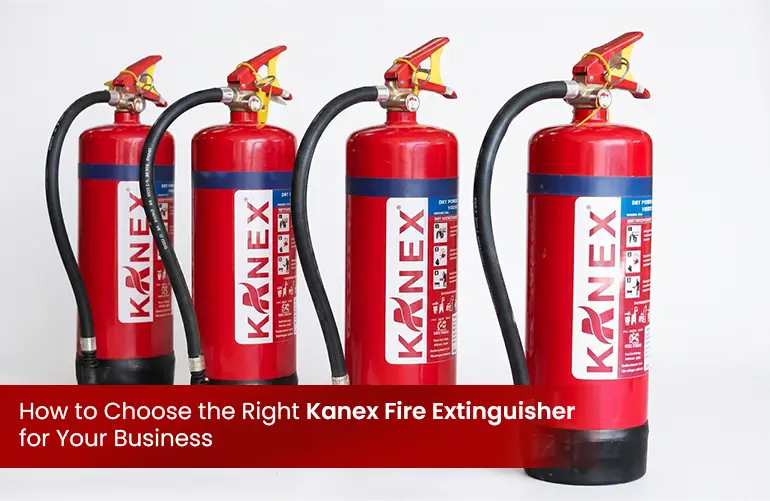
Kanex Fire Extinguishers are widely acknowledged for their quality, reliability, and adherence to safety standards, making them the preferred contingency for any type of fire. 

This Kanex fire extinguisher selection guide will assist your selection of the most suitable extinguisher for your business environment.  

Why Choosing the Right Fire Extinguisher Matters 

Safety is one of the most important factors that must be strictly enforced everywhere. To uphold fire safety compliance and workplace protection, it’s essential to select an apt fire extinguisher.  

For businesses, it’s their responsibility to safeguard valuable assets-employees, customers, and property. Possessing the right extinguisher can easily help control fire hazards right at their breakout stage, preventing spreading, flare-ups, or causing extensive damage.  

But to properly understand fire, you need to have an understanding of their classifications. Each fire hazard has a different response to extinguishing agents, which is why the ideal selection of a fire extinguisher matters and should never be overlooked.

Understanding Fire Classes Before Choosing a Kanex Fire Extinguisher 

Before you make a purchase, you should have an idea on how to choose Kanex fire extinguisher.  Let’s break it down here –  

Class A Fires 

  • Class A fires generally involve risks involving solid combustible materials that are solid in nature.  
  • They are among the most common fire risks in offices, commercial buildings, and schools. 
  • They can be put out using water and foam. 
  • Examples: Solid materials like paper, wood, cloth, cardboard  

Class B Fires 

  • Class B are fire risks involving flammable liquids. 
  • They are more common in industrial places where flammable liquids are used in high quantities. 
  • They can be put out effectively using foam or powder. 
  • Examples: Cleaning fluids, diesel, petrol, paints, solvents, adhesives, etc. 

Class C Fires 

  • Class C fires generally mean fires that are caused by energized electrical equipment. 
  • They are extremely dangerous because of the hazard of electric shock that comes with these electrical fires. 
  • They can be put out using CO₂ or dry chemical extinguishers. 
  • Never use water to put out Class C fires, as it might increase the risk of electrocution. 
  • Examples: servers, electrical panels, power tools, office equipment, etc. 

Class D Fires 

  • A generally rare but serious type of fire cases caused by combustible metals.   
  • They are most notably seen in areas like labs, factories, or industrial settings. 
  • You can go for Class D powder-type extinguishers to mitigate metal fires. 
  • Example: Sodium, Titanium, Lithium, Magnesium, etc. 

Class K/F Fires 

  • Fires involving cooking oils, animal fats, or grease at extreme heat levels. 
  • Most seen in commercial kitchen environments. 
  • Wet chemical extinguishers work best for Class K/F fires. 
  • Examples: Deep fryers, stovetops, ovens, etc.

Key Factors to Consider When Choosing a Kanex Fire Extinguisher 

 Identify Fire Risks in Your Workplace 

  • Start with an in-depth fire risk assessment. Map out potential sources of ignition, combustible materials, electrical equipment, and operational hazards. This will give you an idea of ‘what’ and ‘where’ in the time of crisis. 
  • Pinpoint areas of high risk within your premises and map out locations where fire incidents are most likely to occur.  
  • Since different industries face unique fire risks and challenges, it’s very crucial for this Kanex fire extinguisher selection guide to prepare a comprehensive risk assessment. 

Consider the Type of Business 

  • Offices – They are susceptible to Class A and Class C fires
  • Manufacturing units – Mixed fire risks since the operations could involve chemical, electrical, and combustible material hazards. It’s highly susceptible to Class A, Class B, Class C, and Class D fires. 
  • Warehouses – Susceptible to Class A, Class B, and Class C fires since they can be affected by high quantities of combustible goods and packaging materials
  • Retail stores – Susceptible to Class A, Class B, and Class C fires since there’s the possibility of catching fire from the inventory or electrical systems
  • Restaurants and commercial kitchens – Susceptible to Class K/F fires, involving cooking oil and grease fire hazards.
  • Educational institutions and healthcare facilities – Susceptible to Class A and Class C fires. 

Select the Appropriate Extinguisher Agent 

  • Water-based extinguishers are ideal for Class A fires, involving paper, textiles, wood, etc.  
  • Dry powder extinguishers are highly versatile agents that can handle Class A, B, and C levels of fires in any environment 
  • CO₂ extinguishers is the most suitable agent for electrical regions containing sensitive electronic equipment, like in an office. 
  • Foam extinguishers are highly useful for countering fires when flammable liquids are present, most notably Class A and B fires. 
  • Clean agent extinguishers are designed to protect electronic equipment and valuable assets without leaving residue. 

Evaluate Extinguisher Capacity 

Fire extinguishers offer multiple options that are suitable for a specific level of fire intensity. From small extinguishers offering ease of handling, to medium and large extinguishers that might feel heavy but offer high efficiency and fire control.  

  • There are various factors to consider before purchasing one:  
  • The size of the protected area 
  • Levels of Occupancy  
  • The nature of fire risks 
  • Ease of usage during emergencies and dangers. 

Choose an extinguisher with the appropriate capacity and extinguishing agent to meet your site’s fire protection needs while ensuring safe operation by occupants.  

Check Compliance and Safety Standards 

  • Quality and standardized fire safety equipment that are in adherence to safety guidelines and regulations and meet applicable standards must be your main selection. 
  • Quality-tested Kanex fire extinguishers are highly dependable in delivering effective performance and compliance with workplace safety requirements. Just as our safety tools never compromise quality, you should never yield to any fire extinguisher that fails to meet the required safety standards. 
  • A fire extinguisher is an equipment that holds serious value during fire hazards. Reliable products significantly reduce operational risks and offer greater confidence during emergency situations. 

Placement and Accessibility Considerations 

What would be the purpose of a fire extinguisher if you couldn’t access it in the event of danger?  

  • That’s why it’s very important to think of a strategic placement to keep the equipment – one from where you can easily access it. Install them close to exits, high-risk zones, and frequently occupied areas.  
  • Always ensure that extinguishers remain unobstructed and clearly marked with proper signage. 
  • Make sure to conduct training for employee awareness regarding the location/placement of the extinguishers and the technique to use them. This allows for calm response during real emergencies.    

Avoiding these mistakes can significantly improve workplace safety and compliance. 

Common Mistakes to Avoid When Selecting a Fire Extinguisher 

While purchasing fire safety equipment, be wary of committing the following mistakes –  

  • Choosing based on price alone – Don’t be ignorant with pricing safety equipment. Purchasing cheaper or budget-friendly options could compromise your safety and might not work efficiently during specific fire tasks
  • Ignoring fire risk assessments – Overlooking fire risk hazards can lead to poorly addressed fire protection and might even leave dangerous hazards unattended.  
  • Selecting incorrect extinguisher types – This will flare up the fire emergency further and affect the effectiveness of your response.
  • Overlooking maintenance requirements and inspection – The problem is when the fire extinguishers fail to function when it matters the most.
     
  • Insufficient extinguisher coverage – Will leave parts of your property unprotected and susceptible to fire spreading. 

Conclusion 

Purchasing a fire extinguisher is not a namesake buy and mount formality that a property should follow. It’s an essential precautionary measure that helps mitigate fire hazards, through means like – understanding fire classifications, evaluating workplace hazards, selecting the appropriate extinguishing agent, and ensuring proper placement. 

In this Kanex Fire Extinguisher selection guide, we help you understand the importance of matching extinguisher types to your business’s specific fire risks or potential hazards. By properly understanding how to choose Kanex fire extinguisher solutions, a business can enhance safety, protect valuable assets, and be a responsible entity that remains compliant with fire safety regulations.

At Safetik, we strive to improve workplace safety by combining industry expertise with a comprehensive knowledge of fire and safety products online to help businesses make educated decisions. Whether you are looking for a trusted fire fighting company in Kerala or planning to Buy Fire Extinguisher online, our team of skilled professionals can assist in the selection of the most compatible Kanex fire safety equipment that aligns with your specific requirements and ensure your workplace remains protected.  

Common Kitchen Suppression System Installation Mistakes

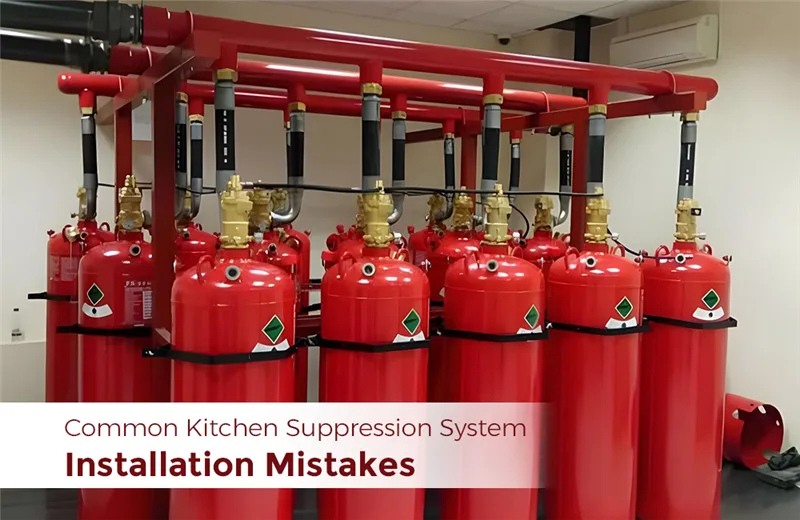
Imagine you are being cooked in a commercial kitchen where food is supposed to be cooked! This happens if a fire accident occurs in a kitchen that lacks a fire suppression system. These systems suppress fire and contain the fire source to prevent fire spreading.   

Proper installation is important because a poorly installed system can fail in an emergency. Most of the cases, installations go wrong due to avoidable mistakes. The blog will discuss common mistakes and how to prevent them.      

Not following the manufacturer guidelines    

Every kitchen suppression system installation comes with specific instructions based on its components and performance standards. Ignoring these guidelines can lead to poor performance or even system failure in an emergency. Different brands or models have unique installation requirements such as nozzle placement, piping configurations, clearance specifications etc. Avoiding these details can compromise the system’s ability to detect and extinguish fires.   

Tip: Always refer to the official installation manual and hire certified professionals who follow the instructions without fail.  

Incorrect nozzle placement     

Incorrect nozzle placement is one of the fire suppression system mistakes. The nozzles are made for high-risk items like stoves, fryers, and grills. These are areas where fires are most likely to start. The system won’t discharge extinguishing agents unless they have been positioned correctly.   

For example, if a nozzle isn’t directly above a deep fryer, it may fail to suppress a spreading grease fire, putting you at serious risk.  

Tip: Always have a professional layout and hazard analysis done before installation to ensure each nozzle is correctly placed for maximum coverage and protection.  

Using incompatible equipment    

Mixing and matching components from different suppression system brands may result in fire suppression system installation issues. It may be convenient or cost-effective, but it’s a serious mistake. Suppression systems are made to work as a complete, integrated unit. Using parts from another brand can disrupt how the system detects fires or releases agents.  

Incompatible components may not trigger properly during an emergency, leaving your kitchen unprotected. Using unauthorized parts can void warranties, violate fire codes, and lead to insurance claim denials in the event of a fire.  

Tip: Always use manufacturer-approved parts and avoid substituting components from different systems.   

Poor maintenance after installation  

Kitchen suppression system installation is just the first step. Regular maintenance is what keeps it working. Unfortunately, many of you may fail to conduct inspections and test the systems or ignore cleaning tasks like clearing grease build-up from the nozzles.  

Poorly maintained systems can have blocked discharge lines, faulty sensors, or expired chemical agents. These make the systems useless in emergency. This is applicable in the case of fire extinguishers too. You should learn how to use a kitchen fire extinguisher and maintain it properly.       

Tip: Set a maintenance schedule and follow it regularly. Keep detailed records of all checks and services.   

Ignoring local fire codes and regulations    

Every city, state, or region has its own fire safety regulations. Kitchen suppression system design, installation, and maintenance also come under these regulations. These local codes ensure systems perform correctly and provide maximum safety in a commercial kitchen environment.  

Ignoring or misunderstanding these regulations can lead to serious consequences. These consequences include heavy fines, forced shutdowns and complete reinstallation of systems. For example, a system that meets national standards might still be non-compliant in your local jurisdiction. This comes under fire suppression system installation issues due to differences in vent hood spacing, appliance coverage, or inspection frequency.  

Tip: Always work with licensed, local professionals who are familiar with the latest fire codes and understand what’s required in your area.  

Inadequate training for kitchen staff    

Even the best kitchen suppression system can fall short if your staff don’t know how to respond when it activates. Inadequate training for kitchen staff also comes under fire suppression system mistakes. Kitchen staff should be trained on how the system works, what happens during activation, and what their role is in that moment. Without training, staff may panic and feel confused about what to do at the time of an emergency. They should know how to evacuate, shut off appliances, and when it’s safe to re-enter the kitchen.  

Tip: Conduct training sessions every month. Include fire drills, explain system components, and walk staff through step-by-step response protocols.  

Kitchen fire suppression systems are important to ensure safety in commercial kitchens. But their effectiveness depends entirely on proper installation, regular maintenance, and trained staff. Common kitchen suppression system installation mistakes are discussed in the blog and are avoidable with the right knowledge and professional support. You can ensure your system performs when it matters most by following manufacturer guidelines, complying with local fire codes, and working with certified experts.  

Safetik is a leading fire fighting company in Kerala, offering the best fire and safety services. With more than 20 years’ experience, we deliver fire safety solutions across industries. Contact us to ensure the safety of your people and property.     

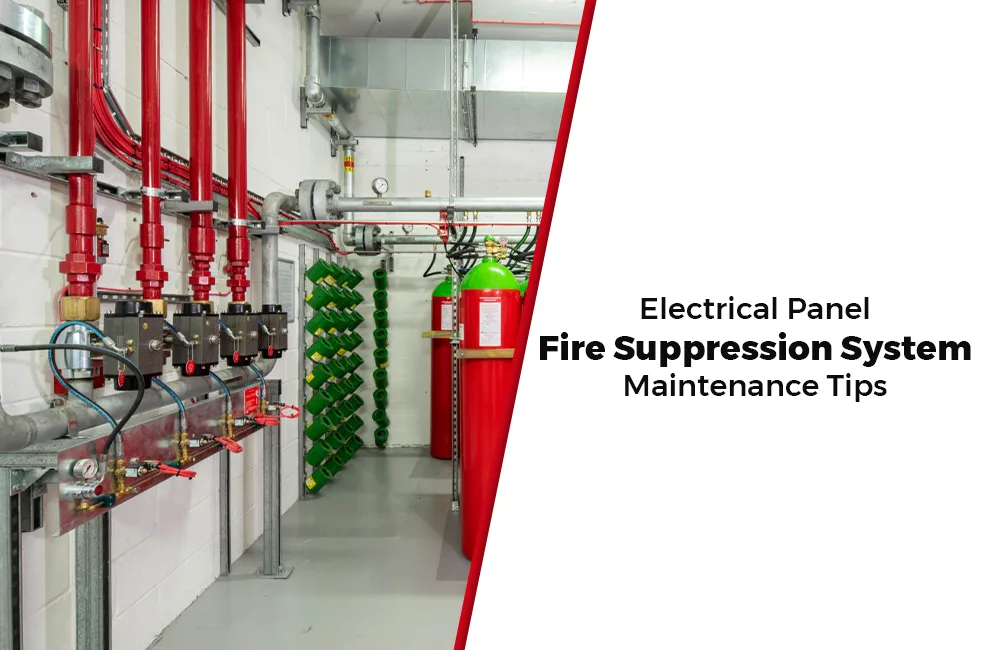
Electrical Panel Fire Suppression System Maintenance Tips

Electrical panels play a crucial role in every building’s power distribution. But if neglected, they can be one of the highest fire risks. Unless you have a fire system in place, a small spark can result in a dangerous electrical fire.  

They prevent or reduce damage, save lives, and promote the efficient operation of businesses. These systems alert people to fires early and suppress them before they become dangerous. 

Electrical panel fire suppression system maintenance is essential to avoiding electrical fires and system malfunctions. By taking care of these problems through periodic inspections and maintenance, facilities can reduce the likelihood of potential risks.  

The blog is intended to offer useful tips for maintenance of electrical panel fire suppression system

Understand your fire suppression system

Let’s begin with the types of fire suppression systems. The primary categories are:  

Clean agent systems: They employ gases such as FM-200 or Novec 1230 for fire extinguishing.  

CO₂ systems: These systems suppress fire by displacing oxygen. They are effective in unoccupied areas like electrical rooms.   

Dry chemical systems: They employ powder-based chemicals such as monoammonium phosphate. These are useful in industrial environments.    

Now let’s move on to the components of a fire suppression system. The main components are detection devices, control panels, actuation mechanisms, nozzles and pipes, alarm and notification devices and pressure & flow sensors.  

Schedule regular inspections      

Having a fire suppression system does not necessarily keep you safe. You need to inspect them from time to time to make sure that they are in good condition. They should be inspected every six months or annually to confirm that they function normally and are safe. The National Fire Protection Association (NFPA) suggests inspections must be performed by a certified technician. 

This inspection assures the state and functionality of all parts of the system like alarms, control panel, sensors etc. 

While inspecting, make sure the fire suppression system is at its intended location and covers the area or equipment to be protected. Ensure manual actuators are readily accessible, unobstructed, and in full working condition.   

Keep the area around the electrical panel clean   

Remove combustible materials such as clutter, debris, and dust. These can cause fires to burn and block entry during emergencies. To avoid overheating caused by the lack of adequate airflow, ventilation is needed. Avoid allowing water to come into contact with the panel to stop short circuits and electric shock hazards.  

Storing items near them may restrict access to the panel, delay emergency response, or become a source of fire if a fault occurs. Combustibles near electrical panels can catch fire quickly if there’s a spark or an overheated component.  

Test alarm and detection components 

Ensure that detection equipment such as smoke alarms, heat detectors, and flame detectors is operational. Check the indicators in the control unit and make sure all panel lights, displays, and fault indicators are correct. Alarm sounders and visual alerts are crucial in an emergency. Reassure that audible alarms and strobe lights will work during an emergency.   

Test the backup batteries and ensure they are in working condition. Check the batteries and replace any weak, expired, or damaged. Don’t forget to log all test dates, results, and corrective actions in a maintenance record. 

Check the suppression agent levels  

For systems that use stored fire suppression agents, verify pressure gauges or measure cylinder weights to ensure agent levels are within an acceptable range. There are chances of leakage, so check for residue, corrosion, or an unexpected drop in pressure. If the levels are low, refill or replace the cylinder immediately. Follow manufacturer or system-specific guidelines for refilling or replacing the suppression agent. Document inspection findings and any corrective actions taken.    

Keep maintenance records   

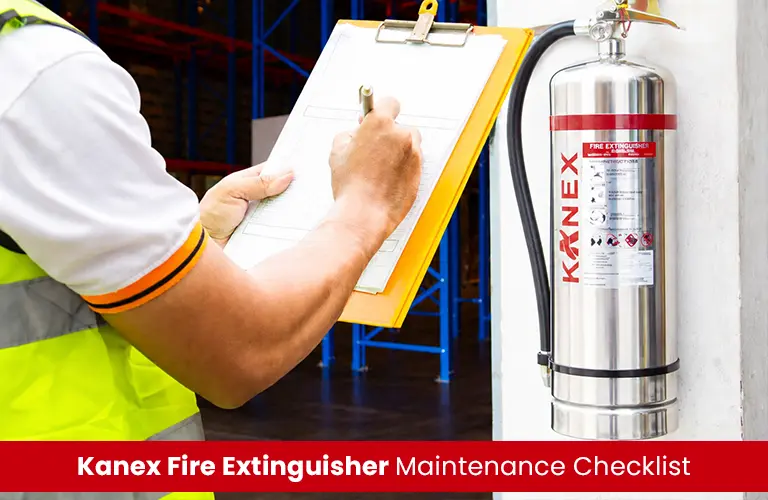
Keeping records of maintenance helps with audits, compliance and tracking system performance. All inspections, tests, repairs and replacements must be logged including dates, findings, agent levels, parts changed, issues fixed, and service provider details etc. 

These records help ensure compliance with fire safety regulations and insurance requirements. Additionally, maintaining a history of service activities helps to identify recurring issues, anticipate potential failures, and plan preventative maintenance more efficiently.

Train staff or occupants 

Staff or occupant training is an essential part of electrical panel fire suppression system maintenance. All people in the building should know the workings of the fire suppression system and the response if it is triggered. This includes identifying alarm signals and evacuation routes. Periodic fire safety training and emergency drills ensure that individuals can respond well and quickly in the event of an actual occurrence.  

Maintenance of electrical panel fire suppression system is critical to guarantee safety, operational integrity, and meet fire safety standards. A well-maintained system not only minimizes the possibility of failure but can avoid expensive fire damage and, above all, save lives. By staying ahead of routine inspections, testing, and employee training, you make the space safer for all.  

Safetik is the leading fire fighting company in Kerala that offers the best fire and safety services. With more than 20 years’ experience, we have delivered many successful projects across various industries. Don’t wait for a fire accident to take place. Book your next maintenance visit with us today and stay protected. 

Things to consider during the refilling process of fire extinguishers

Fire extinguishers are one of the simplest tools for first fire response; in putting out minor fires so they will not develop into major fires. Regular refilling of fire extinguishers enables them to perform when it is needed most. The blog aims to guide take you through the fire extinguisher refilling requirements.  

The things to consider during the refilling process are: 

Check the parts used  

When being refilled, each part must be checked to know that the unit is in perfect working condition and safe for use. 

Valves: They must be leak-free, crack-free, or free of any type of damage. 

Hose & Nozzle: Obstruction or cracking that may inhibit flow of the extinguishing medium needs to be inspected. 

Pressure Gauge: Inspect that it’s reading within the range indicated and in good working condition. 

Seals and Pins: These safety devices should be unbroken and intact to verify that the extinguisher has not been discharged accidentally.  

Refilling test of fire extinguisher 

An adequate test should be performed prior to refilling a fire extinguisher to verify the structural integrity and safety of the device. Pressure test, or hydrostatic test, is carried out by filling the extinguisher with water or other incompressible fluid and pressurizing it to a certain extent to identify any leaks, bulging, or points of failure. Also inspect the inside of the cylinder for rust, corrosion, or internal damage, which can hinder the safety and effectiveness of the extinguisher. 

Every cylinder has a defined shelf life, which ensures its safety. If a cylinder has reached or exceeded its shelf life, it is not safe to refill and must be taken out of service. Attempting to refill an expired cylinder can cause serious safety risks, including the chance for leaks or explosions. 

Ensure proper handling and storage conditions  

The extinguishers should be placed in upright positions in easily accessible and visible positions. They should be stored in a cool dry place or protected from high temperatures or harmful chemicals, if possible, in the -10°C to 50°C temperature range based on the extinguishing agent. Upon refilling, the experts may utilize the proper personal protective equipment (PPE) of gloves, goggles, and protective devices to confirm that they will be safe from pressurized contents and chemicals. 

Inspect the expiry dates  

Perhaps the most important procedure in the fire extinguisher refilling checklist is checking on the expiry date of the extinguishing agent and of the unit itself. All extinguisher types such as dry powder, foam, CO₂ or wet chemical all have a recommended service or refill period, generally 3 to 5 years based on type and manufacturer recommendation. Don’t forget that even though an extinguisher may have never been used, it should be inspected and serviced regularly. 

Refill with the correct type of agent  

Recharging a fire extinguisher with the right kind of extinguishing agent is necessary because different agents are meant to put out different classes of fire. The wrong agent for the extinguisher can result in improper extinguishing of fire, equipment damage, or even start the fire. Incorrect refilling can cause pressure imbalance, nozzle blockages, or improper spray patterns. 

Verify the weight after refilling  

In refilling a fire extinguisher, one needs to find the final weight to that the right quantity of extinguishing agent has been added. A unit that is underfilled will not discharge enough agent to put out the fire, and an overfilled unit may result in pressure or mechanical failure. 

For weight verification, use a calibrated weight device and compare the reading to the manufacturer’s marked full weight (usually on the body of the extinguisher). 

Test the functionality  

Recharging a fire extinguisher comes with the necessity of conducting a functional test as a precautionary measure to find out whether it will function efficiently in case of emergencies. A functional test ensures issues such as blockage, faulty valves, or leakage are identified prior to reutilization. 

Even though discharge testing to full capacity is not required after every refill, there should be a functional test in routine maintenance, typically once a year or as stipulated by safety legislation and the extinguisher manufacturer. 

Certification and compliance 

It is essential that the refilling of the fire extinguisher process align with local fire safety standards to guarantee security and prevent legal complications. Refilling should always be carried out by professionals who have been trained and certified in understanding BIS standards and can service pressurised systems safely.  

Documentation and record keeping 

Correct and proper documentation is part of the requirement in refilling and maintaining fire extinguishers. Each refill will have to be followed by a full set of records, with the record in the form of a maintenance log, required for regulatory purposes and safety audits. 

A properly kept logbook helps to track the service history of all the extinguishers so that they are inspected and recharged at regular intervals as per standards. It also helps to identify recurring problems, schedule future services, and demonstrate compliance to fire safety inspections by local authorities. 

A fire extinguisher refilling checklist guarantees that all significant steps are followed to ensure maximum safety and compliance. Fire extinguisher maintenance and refilling are the essential things to consider during the refilling process in preventing fire-extinguishing equipment from failing when it is required. A well-maintained extinguisher can save lives by preventing a fire from spreading. 

Safetik provides the finest fire and safety services in Kerala, catering to many industries. With over 20 years of experience, they want to provide good service by being ahead in business. 

How to Properly Use a Kitchen Fire Extinguisher?

Fire safety is paramount, especially in kitchens as kitchen fires are one of the most frequent types of household accidents. Distraction at any moment can cause an instant hazardous condition. Using fire extinguisher products can make a great difference. During a small fire, speedy and correct action with an extinguisher is able to confine the fire from spreading. This results in less property damage and protects lives. Being aware of its usage makes you able to act quickly and effectively in a crisis.

Why are kitchen fire extinguishers important?

Kitchens are subject to fire hazards due to the presence of electrical appliances, hot oil, and open flames. The chances of fire outbreak in the kitchen is high, yet most people still lack a kitchen fire extinguisher to deal with the fire. A fire extinguisher applied at the initial stage of fire could easily prevent it from becoming uncontrollable. While fire suppression systems might be beneficial, they cannot address fire issues independently. Commercial and domestic kitchens thus need to have a fire extinguisher installed.

 The kitchen fires are divided into three – class A, B and C fires.

Class A fires are due to materials that are combustible such as wood, paper, and fabric.

Class B fires are created by oily liquids and grease. Most kitchen fires fall under this category.

Class C  –  fires involved in gases 

Class E  fires include electrical devices such as domestic appliances such as toasters, microwaves, and ovens.

Types of kitchen fire extinguishers

There exist different types of kitchen fire extinguishers depending on the nature of the fire. The common types are:

Dry chemical extinguishers

These are appropriate to fight class A, B and C fires. The fire extinguisher uses a powder to force fuel out of oxygen, thus preventing the fire. A chemical called monoammonium phosphate is used inside the extinguisher. The powder creates chemical insulation for a Class A fire, disrupts the chain reaction in a Class B fire, and is non-conductive, making it safe to use in a Class C fire.

CO2 extinguishers

They are the ideal choice for extinguishing electrical fires. CO2 extinguishers displace the oxygen around the fire with carbon dioxide, so the fire is extinguished. Never use them in enclosed areas since they displace oxygen and cause suffocation due to the reduction of oxygen.

Class K extinguishers

They are employed against fires due to cooking oils and fats. Class K extinguishers are the only extinguishers that can be used to put out fires involving animal fats and cooking oils. Other types can be less effective and even make it worse. They suppress the fire by releasing a chemical that reacts with the oil or fat and forms a soapy material that extinguishes the fire.

Step-by-step instructions for operating a kitchen fire extinguisher

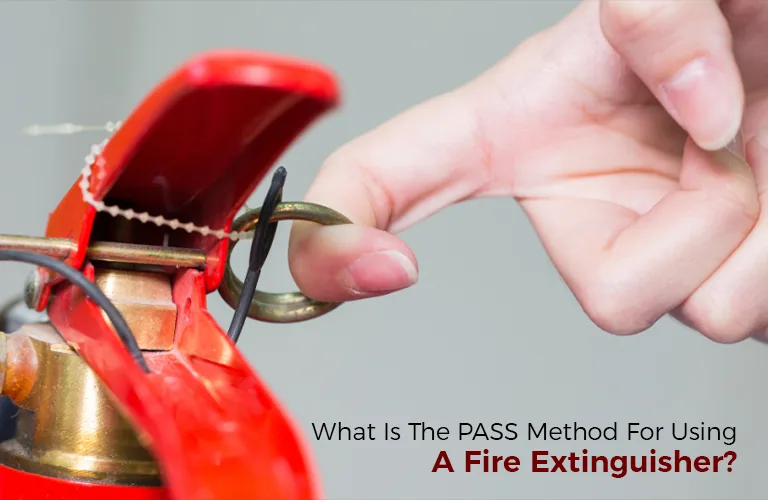
Remember the PASS technique

P – Pull out the safety pin on the extinguisher to release the extinguishing agent.

A – Point at the bottom of the fire and not the flames to properly extinguish the fire.

S – Squeeze the handle to release the agent.

S – Sweep the nozzle from side to side to pass over the entire base of the fire.

Maintain a safe distance

Safety will be very important when using a commercial kitchen fire extinguisher. Keep at least 6-8 feet of space from the fire. While the fire begins to decrease, move closer to assure full extinguishing.

Focus on the base of the fire

Spraying at the flames is ineffective. Instead, aim at the base of the fire. By aiming at the base, you can cut off the spread of the fire. Extinguish the fire fully to prevent it from flaring up again.

Monitor for reignition

There is a possibility of re ignition even after the fire has been put out. Stay alert and watch for signs of fire coming back. If it reignites, repeat the process and if it grows uncontrollable evacuate immediately and call emergency services.

Tips for maintaining a kitchen fire extinguisher

Inspect the pressure gauge every month and verify that the needle is within the green area. When the pressure is too high or low, the extinguisher will not function. Check the nozzle for clogs that may block the spray. Wipe the nozzle clean regularly to ensure a clear discharge path.. So give it a gentle shake every few months to keep the chemicals loose and ready for use. Commercial kitchen fire extinguishers must be refilled or replaced even after partial discharge to ensure full functionality next time.

Conclusion

Fire attacks can happen at any time, particularly in the kitchen. So fire safety precautions are to be adopted. Having a kitchen fire extinguisher and the knowledge of how to use it can prepare you for it. Class K extinguishers are advised for fires that take place in the kitchen. Keeping a properly maintained extinguisher in your kitchen enables you to face any fire danger if ever happens.

Contact Safetik, one of the leading firefighting equipment suppliers for fire and safety services in Kerala. They deliver fire safety solutions across various sectors and ensure you are fully prepared to face fire issues.

Where to Keep Lithium Battery Fire Extinguishers?

Have you heard of Lithium battery fires? They pose a significant threat due to their high energy density and potential for thermal runaway compared to regular fires. Unfortunately, it can reignite even after being extinguished, making the situation extremely dangerous. Here comes the importance of having a dedicated Lithium Battery Fire Extinguisher. They aren’t just extinguishers preventing severe damage and ensuring safety, but lifesavers of the whole world.

But Where to keep lithium battery fire extinguishers? Proper placement of these extinguishers is essential for quick response and effective fire control. In this blog, we will discuss the best storage spaces for lithium battery fire extinguishers to maximize safety.

Best Places to Store Lithium Battery Fire Extinguishers

Workplaces & Offices

Workplaces and offices have common areas where multiple electronic devices, powered by lithium-ion batteries and great care are crucial in this location. The best workplace for Lithium battery fire extinguisher placement includes:
 1. Near charging stations for laptops, power banks, and mobile devices.
 2. In server rooms where large storage units with backup batteries are identified.
 3. Near workstations with high-powered electronic tools or battery-operated devices are used.

Factories & Warehouses

Factories and warehouses are the most important places that are capable of producing Lithium battery fires where they are dealing with battery-operated machinery or storage of lithium-ion batteries on a day-to-day basis. Working of Lithium-ion Battery Fire Extinguishers are unimaginably effective for all those problems that involve fire. Hence, they should have fire extinguishers in strategic locations:
 1. Close to storage areas where lithium-ion batteries are kept.
 2. Near assembly lines where battery-powered tools are used frequently.
 3. Alongside standard fire safety equipment, that provides quick access in case of emergencies.

Homes & Residential Areas

Home is an underrated place where lithium batteries are used. As the number of battery-powered devices at home increases, the possibility of a hazard to happen is high. So, Storage of lithium battery fire extinguishers is more than crucial and should keep Lithium Battery Fire Extinguishers within your reach. Key locations to keep the fire extinguisher are:
 1. Near electric scooters and e-bikes, most commonly kept in garages or parking sheds.
 2. In storage rooms, where power tools and spare batteries are stored.
 3. Close to home offices if any, especially if multiple charging devices are used regularly.

Electric Vehicle (EV) Charging Stations

Electric vehicles are increasing day by day and the use of lithium batteries is undoubtedly high. Having the right fire safety measures in place is important:
 1. In-home garages with EV charging ports, to initiate fast response in case of battery malfunctions.
 2. In public charging stations, where you can see multiple vehicles charging simultaneously that has the risk of overheating.

Airports & Transportation Hubs

Airports and transportation hubs handle battery-powered devices daily, turning them into hotspots for lithium battery fires. More awareness should be delivered where huge quantities of batteries are being constantly used and yes, it is indeed a great task in the  storage of lithium battery fire extinguishers safely. Places to store Lithium Battery Fire Extinguishers include:
 1. Baggage handling areas, where passengers’ electronic devices are transported.
 2. Cargo sections, as lithium-ion batteries are often shipped.
 3. Maintenance zones, where battery-powered equipment and vehicles are in use.

Additional Storage Tips

Storage of lithium battery fire extinguishers should be properly monitored and must focus on the safety rules. There are more places than the ones we discussed and it is equally important to have perfect Lithium battery fire extinguisher placement in every other location where lithium batteries are used and places which are prone to those types of fires. Follow these tips:
 1. Position them in easily accessible locations, avoiding obstructions in between.
 2. Place extinguishers at an appropriate height, allowing for quick and easy use.
 3. Train staff and residents on their usage, and promote prompt and effective fire response.
 4. Regularly check extinguisher conditions, and analyze that they are in proper working order.

Conclusion

The placement of Lithium Battery Fire Extinguishers is just as important as having them. Where to keep lithium battery fire extinguishers? -is an important question in this worldly situation where everything is unpredictable and the blog has answered so efficiently.  Businesses, homeowners, and public institutions must take care of these extinguishers and store them in accessible and strategic locations. Proactive fire safety aims to avert major loss by responding quickly in an emergency. Safetik offers the best Fire and Safety Services in Kerala, including high-quality Lithium Battery Fire Extinguishers. Visit us today. Prioritize safety and be prepared for lithium battery fires!

Benefits of Using Water Mist Fire Extinguishers

Fire safety- the ultimate thing that everyone should be aware of. We cannot predict the hazards that cross our path, and it is very vital to keep a fire and safety system that never compromises the quality. No matter where you live or work, you need to be informed about the basics of fire safety and equipped with the right tools. Unlike traditional extinguishers that are difficult to handle, water mist fire extinguishers are an effective and eco-friendly fire-fighting solution. To educate you more, this blog will cover the key benefits of using water mist fire extinguishers.

What is a Water Mist Fire Extinguisher?

A water mist fire extinguisher is a fixed fire safety device that emits a thin mist of tiny water droplets. The water mist systems use a specially made nozzle to spray ultra-fine water droplets through, causing the water to break up into hundreds of tiny droplets that create the mist while cooling down.

Water droplets will displace oxygen and remove heat from the afflicted area at the time of fire breakout and suppress the fire.  The temperature, radiated heat, and oxygen concentration are all lowered by the mist to the point where combustion is no longer possible. These extinguishers are versatile and helpful in suppressing all types of fires, including:

 1. Class A: Fires produced by solid combustible materials such as wood, paper, and textiles.

 2. Class B: Fires caused by flammable liquids like petrol, diesel, and oil.

 3. Class C: Fires involving gases such as propane and butane.

 4. Electrical Fires: Unlike traditional water extinguishers, water mist does not conduct electricity, making it safe for electrical fire suppression.

Key Benefits of Water Mist Fire Extinguishers

Safe for Use on Electrical Fires

The first and foremost water mist fire extinguisher benefit is that, unlike traditional water extinguishers, it can be used on electrical fires. The ability to combat electrical fires makes it an ideal choice among fire prevention methods. The fine mist produced does not conduct electricity, making it a safer option, and it can be used in offices, hospitals and data centres where electrical fire dangers are common. 

Suitable for Multiple Fire Classes

An ideal fire extinguisher should be capable of putting off all types of fires, irrespective of the fire class system. Water mist fire extinguishers stand out at this moment, where they act as a life saver by having the power to extinguish Class A (solid materials), Class B (flammable liquids), and Class C (gases) fires. As an additional note, it is also effective on cooking oil and grease fires in kitchens, stating its water mist fire protection benefit in the households too.

No Harmful Chemicals

Another important water mist extinguisher benefit is that it uses only water, making it non-toxic and safe for humans, pets, and the environment. There are no harmful residues or chemicals that cause future health problems, making it ideal for food-related environments and hospitals. Therefore, this can be used in hospitals, schools and any working environment where the ultimate priority lies in safety. 

Reduces Smoke and Toxins

In most cases, the fire suppression causes a pathetic situation where a pretty good amount of smoke is released, affecting the daily life of individuals. This can create major respiratory problems with the toxins produced. On the safety side, this problem can be solved with a water mist fire extinguisher that cools the fire and reduces the production of harmful smoke and gases. It also helps improve air quality and visibility in a fire emergency.

Eco-Friendly Solution

The best eco-friendly fire extinguisher is undoubtedly the water mist fire extinguisher, and Water mist fire protection benefit is something that aids both humans and the environment. It does not release harmful chemicals or greenhouse gases. Also, Biodegradable and safe for the environment, elevating it as a safety measure that aligns with nature’s rules.

Minimal Cleanup Required

One of the major problems for traditional extinguishers is their difficulty to clean and maintain. On the contrary, water mist fire protection benefits include the minimal cleanup where you can simply clean it up in less time.  Unlike foam or powder extinguishers, water mist leaves little to no residue, making post-fire cleanup quick and easy.

Efficient and Fast Fire Suppression

The water mist fire extinguisher advantages extend to efficient and fast fire suppression. Water mist quickly cools the fire, reducing the chance of re-ignition, and small water droplets evaporate fast, absorbing heat more effectively. It is certainly perfect for all sorts of fire suppression. 

Conclusion

Water mist fire extinguishers are useful for battling a wide range of fires. This makes them suitable for a wide range of facilities. Unlike traditional fire extinguishers, the Water mist fire extinguisher advantages include the ability to suppress multiple types of fires, non-toxic nature, and minimal cleanup requirements, make them an excellent choice for homes, businesses, and industrial settings. 

It is definitely a wise choice if you are looking for a reliable safety measure for your home or enterprise. Encourage readers to consider them as a reliable fire safety solution. If you’re looking for fire and safety services in Kerala, you can rely on Safetik to ensure the best services. Remember, a water mist fire extinguisher can significantly improve property and life safety. Discover premium fire safety products and water mist fire extinguishers to increase the security and safety of your building.

How Does a Water Mist Fire Extinguisher Work?

Fire safety is a basic aspect of every field, meant to protect lives and property. Amidst all the newly implemented fire safety tools, fire extinguishers are regarded as the most preferable and easiest method to prevent fire from spreading and creating havoc. Among the fire extinguishers available in the market, water mist fire extinguishers have a separate fan base due to their unique technology for effectively preventing fire. The mist technology incorporated in this makes it unique by safeguarding both people and the environment efficiently.

In this blog,we will discuss the working of water mist fire extinguishers, their advantages, and where they are commonly used. This will make you more aware when choosing the best extinguisher for your future use.

What Is a Water Mist Fire Extinguisher?

A water mist fire extinguisher is a kind of extinguisher that puts out fires by using tiny water droplets. Because the droplets are so tiny, they evaporate rapidly, causing a cooling effect that extinguishes the fire.

Water mist fire extinguishers and conventional water fire extinguishers seem to be identical at first glance. There are a few notable distinctions, though. The agent itself is where the most significant distinction lies. “De-ionized water” is found in water mist extinguishers. All minerals that are electrically conducting have been eliminated from de-ionized water. This makes it somewhat comparable to distilled water, even though de-ionized water only contains dissolved minerals and not all other pollutants. This guarantees that a water mist fire extinguisher’s water has extremely low electrical conductivity.

Key Components and Mechanisms

  • High-Pressure Nozzle: Changes water into microscopic droplets.
  • Ultra-Fine Mist: Enables rapid cooling and fire suppression.
  • Non-Conductive Properties: Safe for electrical fires.
  • Low Water Consumption: Minimizes collateral damage.

These Water Mist Fire Extinguisher mechanisms can provide high safety compared to traditional extinguishers

How Does a Water Mist Fire Extinguisher Work?

Let us now understand How Water Mist Fire Extinguisher works:

  1. Fine Mist Technology
    The nozzle of the extinguisher spreads the smallest particles of water mist to put out fires and burning objects.
  2. Cooling Effect
    The fire actively attracts the mist particles, which quickly evaporate on or close to the surface to effectively cool the fire.
  3. Oxygen Displacement
    Eliminates the radicals produced by the fire and lowers the oxygen content close to the flames. The fire is consistently put out by the absence of oxygen and radicals as well as the temperature drop.
  4. Minimal Water Usage
    Water mist technology uses only a fraction of the water required by traditional water-based extinguishers, making it ideal for locations like data centers and hospitals, where excessive water use could cause damage.

Advantages of Using a Water Mist Fire Extinguisher ?

  1. Non-toxic and Environmentally Friendly
    Since no hazardous chemicals or gases are utilized or released, there are no worries about the negative effects on the environment. They do not harm the ozone layer in any way.
  2. Minimal Collateral Damage
    The use of distilled water eliminates the possibility of collateral damage to the buildings, furniture, and electrical equipment.
  3. Effective for Multiple Fire Classes
    They are a flexible option, as they can be used on Class A (solids like paper and wood), Class B (flammable liquids).
  4. Safe for Human Exposure
    They are safe to use on both people and animals. It is not a dangerous mist. There is no chance of respiratory illnesses because the water mist is non-toxic. Also, it is suitable for usage in small places, because it has no negative effects, even if breathed.

Where Are Water Mist Fire Extinguishers Commonly Used?

Due to their efficiency and safety, Water Mist Fire Extinguisher Mechanisms are widely used in various industries and facilities, including:

  • Healthcare Facilities: Hospitals, care homes, and clinics, where sensitive medical equipment and patient safety are top priorities.
  • Data Centers and IT Rooms: Essential for safeguarding servers and electrical components from fire damage.
  • Commercial Kitchens: Safe for food environments and highly effective against grease fires.
  • Museums and Heritage Buildings: Prevents water damage to valuable artifacts while ensuring fire safety.

Fire safety is not something to be taken lightly; it plays a crucial role in protecting lives and property. Fire extinguishers, therefore, serve as invaluable tools in ensuring safety, and choosing the right extinguisher can make all the difference.

The working of Water Mist Fire Extinguishers offer an advanced fire suppression system that is both effective and environmentally friendly. With their ability to tackle multiple fire types while minimizing damage, they are the perfect fit for various industries striving for fire safety.

Are you looking for effective and reliable fire safety solutions? Safetik provides high-quality Water Mist Fire Extinguishers and is the leading provider of Fire and Safety Services in Kerala. Contact Safetik today to ensure complete protection! Stay alert, stay safe!

Posts pagination

×