School infrastructure is a highly lively and busy location where hundreds of children, teachers, and staff spend multiple hours every day. In the event of an unforeseen emergency like fire, even the slightest delay in evacuation can lead to serious consequences and worser repercussions. That is why fire safety is an essential life safety aspect that is more than a mere formality. From proper extinguishers and alarms to safe evacuation routes, every measure matters.
For educational institutions prioritizing fire safety with utmost importance and pursuing a reliable safety support, working with a firefighting company or sourcing fire and safety products online is a highly effective option that can help ensure that essential equipment is available and properly maintained.
What is a Fire NOC?
- A fire NOC (No Objection Certificate), generally known as a fire safety certificate is an official document that is issued by local fire department or fire safety officer to confirm whether a building infrastructure has met the appropriate fire safety norms and requirements.
- The inspection mainly considers factors that are of immediate use during a fire incident, such as fire protection systems, emergency exits, access for firefighting equipment, fire alarms, extinguishers, hydrant arrangements, and other safety provisions applicable to the building.
Eg – CBSE requires affiliated schools to comply with applicable state or municipal fire safety requirements, with the certificate being issued either by the government fire department or authorized local authority, as applicable.
Why Schools Need a Fire NOC
A fire NOC is more than just a formality; it upkeeps the proper maintenance of safety equipment that should be operation-ready in the event of an emergency. Legal compliance is highly necessary for school recognition and affiliation with boards such as CBSE and state boards.
But more importantly, it helps reinforce the following –
- Protecting Children and Staff – Schools are generally filled with children and staffs, but when an emergency occurs, it’s the younglings that might need more assistance – particularly because they may not respond quickly or understand how to evacuate safely. With a systematic and properly planned fire safety system, confusion can be avoided, and evacuations can be facilitated faster.
- Insurance and Liability Protection – Fire safety certification is an essential part of the regulatory and affiliation requirements applicable to educational institutions, like for instance, in CBSE schools, they are required to observe applicable state and municipal fire safety requirements.
- Therefore, the maintenance of a valid and authentic NOC for schools exceeds the status of mere paperwork and serves as evidence that the institution is actively fulfilling its safety responsibilities.
- Builds Trust with Parents – An educational institution, be it a school or college with well-equipped and maintained fire protection systems are more responsive and operational-ready in the face of emergencies. This reassures parents, boosting their confidence that the institution is committed to safety and values it seriously.
Fire Safety Requirements Schools Must Meet
Each building has varying requirements – occupancy, location, height, and applicable regulations. For fire NOC requirements for schools, the most common provisions include the following:
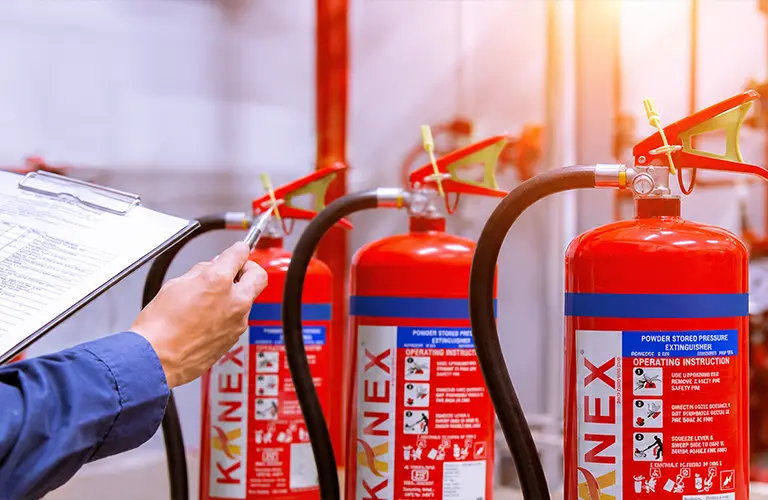
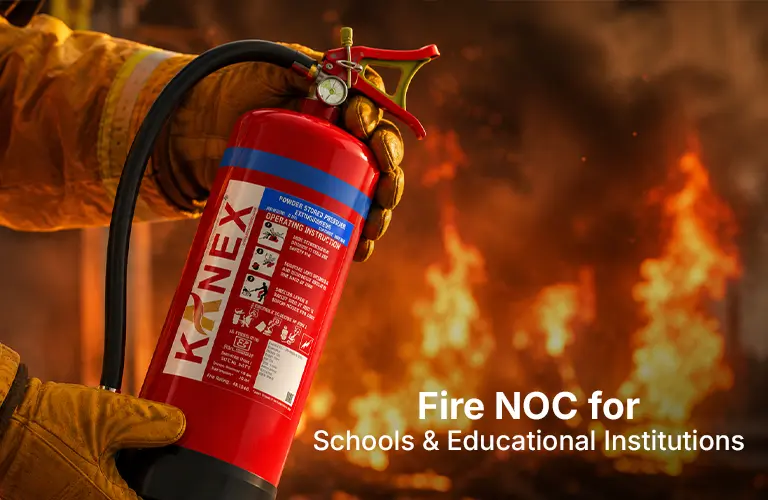
- Equipping adequate fire extinguishers at every level of the floor, at appropriate locations offering ease of access.
- Clear and visible emergency exit markings and unobstructed evacuation routes.
- Installation of fire alarms and smoke detection systems at required places.
- Adequate water storage, hydrants, and associated firefighting arrangements where applicable.
- Safe and compliant installation of electrical systems, ensuring no exposed or damaged wiring is present, and all connections are secure.
- Emergency lighting and appropriate safety signage.
- Conduct regular fire drills and evacuation exercises to make people ready for emergencies.
- Proper and easy access for emergency and firefighting services to all.
These are some of the essential safety measures that should be installed, inspected, and maintained regularly to ensure compliance with fire NOC for educational institutions. As a leading firefighting company in Kerala, Safetik ensures secure and compliant firefighting services by providing fire extinguishers, fire suppression systems, hydrant systems, alarm systems, refilling, and maintenance services helping educational institutions actively ready for emergencies.
Step-by-Step Process to Get Fire NOC
Acquiring a fire NOC varies from one jurisdiction to another, but the process generally involves the following stages:
Step 1: Submit the application – The designated and authorized representative or the school submits an application to the relevant fire department or body of authority.
Step 2: Submit required documents – Essential documents, including the approved building plan, ownership or occupancy proof, details of the building, and information about installed fire safety equipment, are submitted firsthand to prove total compliance.
Step 3: Site inspection – Fire officials inspect the premises in detail to assess whether the required level of safety arrangements has been provided and is totally operational.
Step 4: Rectify deficiencies- If any shortcomings such as blocked exits, inadequate equipment, or unsafe installations are identified in the process, the school must justify the deficiencies and ensure necessary rectifications before getting approval.
Step 5: Certificate issuance- Upon verification of total compliance with the applicable safety standards, the responsible authority grants the Fire Safety Certificate/NOC, as applicable.
Common Reasons Schools Fail Fire NOC Inspection
The most common issues that can cause problems during inspection often result from careless or negligent actions that could be avoided with proper attention.
- Blocked and poorly marked emergency exits.
- Expired, poorly maintained, damaged, or malfunctioning fire extinguishers.
- Lack of documented fire drills and fire safety awareness activities.
- Obstructed evacuation pathways and exits.
- Poor and unsafe electrical maintenance.
Regular inspections help map out potential problems and help rectify them before an official inspection.
Validity & Renewal –
- A Fire NOC doesn’t necessarily have a specific universal validity period across India. The validity and renewal requirements mostly depend on conditions like the state, local authority, type of building, and applicable regulations.
- Educational institutions should check the expiry date in their certificate and begin the renewal process well in advance.
Conclusion
A fire NOC for schools is not to be overlooked merely as a document of compliance – it represents a commitment to protecting students, teachers, and staff. An emergency does not wait to happen; it’s a quick unfolding of unprecedented events that requires calm and composed handling. Understanding the fire NOC requirements for educational institutions and keeping fire protection systems well maintained can be the life saver during such emergencies. In essence, it is a commitment where preparedness must be treated as an ongoing responsibility.
If your institution requires professional guidance, equipment, installation, inspection, or maintenance, Safetik is a Kerala-based fire safety solutions provider serving schools and educational institutions. You can rely on a trusted firefighting company in Kerala, procure high-quality fire extinguishers online, and establish dependable, operational fire safety systems that keep your campus safe when it matters most.