How Fire Suppression Systems Reduce Downtime

Fire accidents are unprecedented accidents that can bring businesses to an abrupt halt, leading to operational disruptions and financial losses. Even the smallest spark could lead to a fire that ends up damaging expensive products, destroying important documents, affecting production, and even compromising the safety of a workplace. 

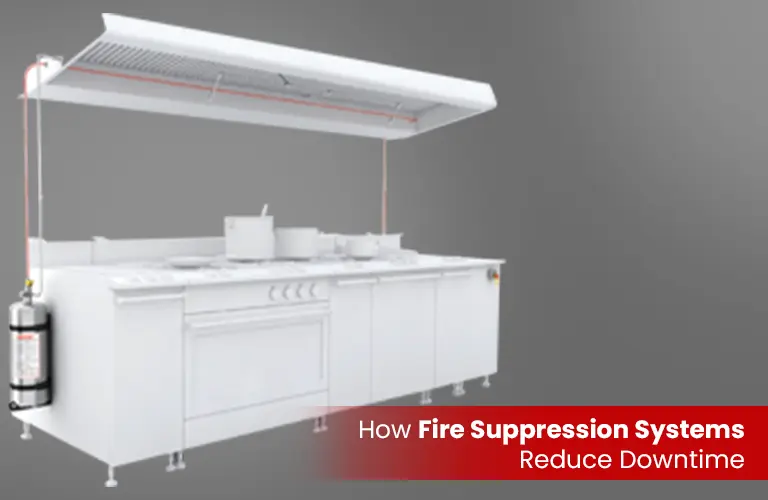
A professionally designed advanced fire suppression system provides swift and seamless response through early detection and control of fires before they flare up. By minimizing damage and preventing longer shutdowns, these highly useful fire systems help businesses reduce service interruptions (downtime), protect valuable assets, and resume normal operations immediately. 

In this article, we will help you understand how fire suppression systems help reduce downtime and why it’s essential for all businesses.  

What Does Business Downtime Mean?  

Business downtime is a period of total inactivity where organizations cannot operate at all due to unexpected events like fire. During this time, the entire business halts its essential functions; employee workflow is temporarily stalled, and customers might face delays in service or product delays.  

The impact of downtime can include: 

  • Production and manufacturing delays 
  • Lost sales and reduced revenue 
  • Employee productivity interruptions 
  • Costly equipment repairs or replacements 
  • Customer dissatisfaction 
  • Reputational damage 

Even a fraction of time lost can inflict financial consequences upon the business, making fire protection an extremely essential aspect for business continuity. 

How Fire Suppression Systems Help Reduce Downtime  

Detect Fires Early 

  • Modern fire detection systems utilize highly advanced sensors to identify smoke, heat, or flames almost immediately after its formation.  
  • When a danger is detected early, immediate action can be taken to prevent the fire from flaring out to other places or buildings.  
  • This swift response helps contain hazardous escalations effectively while avoiding prolonged operational disruptions.  

Control Fires Automatically 

  • Modern technology has evolved automation to a point where manual action has less burden in deescalating issues.  
  • The sensors get triggered, and the system instantly responds automatically – all without manual intervention.  
  • This rapid response minimizes damage to equipment, inventory, and property while reducing further repairs. 

Protect Critical Equipment 

  • Most businesses rely on extremely valuable assets like servers, electrical panels, manufacturing machinery, communication systems, and other valuable assets.  
  • That’s why they install highly effective fire suppression systems that control the fire from escalating before they severely damage the assets.  
  • Preserving essential equipment helps businesses control the need for excessive repairs and lengthy replacements while enabling operations to move seamlessly with minimal interruption. 

Minimize Business Interruptions 

  • Swift containment helps facilitate faster cleanup and restoration. 
  • This helps limit the damage through fewer repairs, reduced operational delays, and a quicker resumption of business activities, minimizing revenue loss, and maintaining customer confidence without further escalation. 

Improve Employee Safety 

  • During a fire emergency, human safety is the no. 1 priority. Businesses should make sure to buy fire suppression systems that are highly effective and installed optimally. 
  • An effective fire suppression system creates a safe workplace, reassuring the employees, and effectively controls fires rapidly without excessive exposure to dangerous smoke and flames.  
  • Protecting employees not only prevents injuries but also allows businesses to recover and resume operations more efficiently after the emergency.  

Additional Benefits Beyond Reducing Downtime  

The benefit of investing in a fire suppression system lies in its ability to control hazardous fire incidents and minimize operational interruptions effectively before they escalate into worser issues. 

Some of the most useful benefits are – 

  • Protects valuable business assets, inventory, equipment, and other essential resources. 
  • Early prevention or immediate response can reduce repair costs, replacement, and restoration costs.  
  • Supports business continuity and initiates disaster recovery significantly faster.  
  • Makes organizations responsible and compliant with fire safety regulations and industry standards. 
  • Build customer trust and boost their confidence by showcasing your commitment to safety. 
  • May help in the reduction of insurance risks and insurance premiums. 
  • Improves workplace safety and operational resilience, making dangers more manageable. 

Conclusion  

Fire suppression systems deserve more credit than what people give them credit for. They play a vital role in reducing business downtime through early detection and the controlling of fires before they flare up into a worse incident.  

This rapid response is the cornerstone of workplace safety that safeguards employees, valuable equipment, critical infrastructure, and business operations, enabling fast recovery and containing financial losses.   

At Safetikwe prioritize reliable fire suppression solutions that are ideally tailored to the unique needs of commercial, industrial, and institutional facilities more than anything. From the initial design of the system, its installation, testing, and maintenance, to the continuous support provided by our team, we strive to help businesses maintain a safe environment and ensure uninterrupted operations. 

That’s why it’s very important to invest in the right fire and safety products onlinelike with Safetik, a trusted firefighting company in Kerala, where reliable fire safety solutions are served to help reduce downtime and keep your operations running. 

Why Regular Fire Extinguisher Inspections Are Essential

Fire safety is a critical responsibility for protecting both people and property alike. It requires a proactive approach, as emergencies could occur unexpectedly and without warning at any time. Being prepared with the right fire protection equipment means you are capable of quick response, limiting the danger on people, property, and the surrounding environments.  

However, simply installing a fire extinguisher is not enough; it’s an ongoing responsibility that should be taken seriously. Partnering with a trusted firefighting company in Kerala like Safetik, helps ensure your equipment remains service-ready and fully functional when it matters most. 

A neglected or faulty extinguisher can pose a serious danger, especially if it fails to work effectively during emergencies, threatening life and property alike. In this blog, we’ll explore the fundamentals of fire extinguisher inspections, and why they are extremely crucial for maintaining a safe and secure environment.  

What Is a Fire Extinguisher Inspection?  

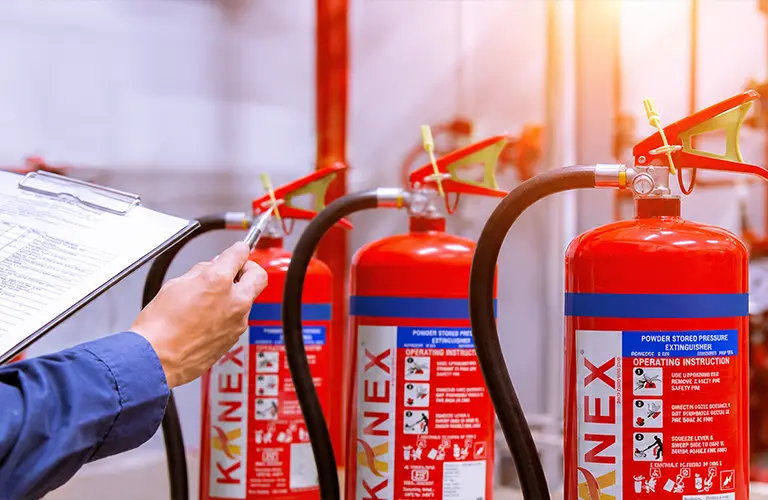
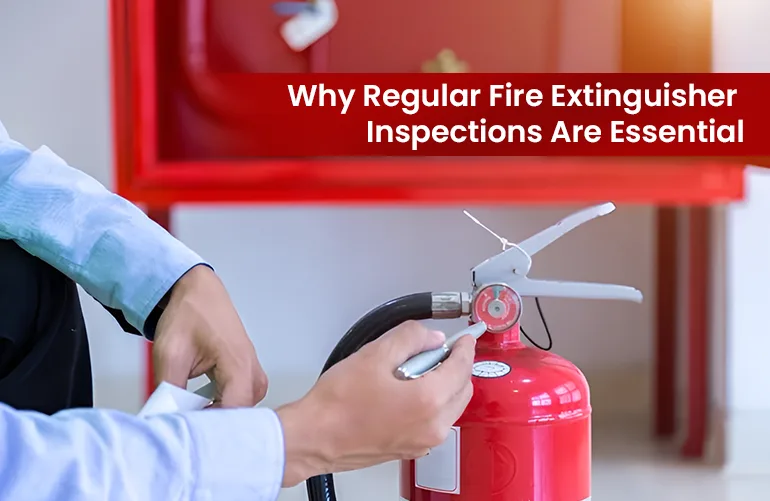
A fire extinguisher inspection basically is a routine examination conducted on fire extinguishers to verify its functionality – whether it is in proper working condition and ready for immediate use. These essential inspections help identify potential issues such as damage, leaks, missing components, or low pressure that could drastically affect performance in the face of an emergency. 

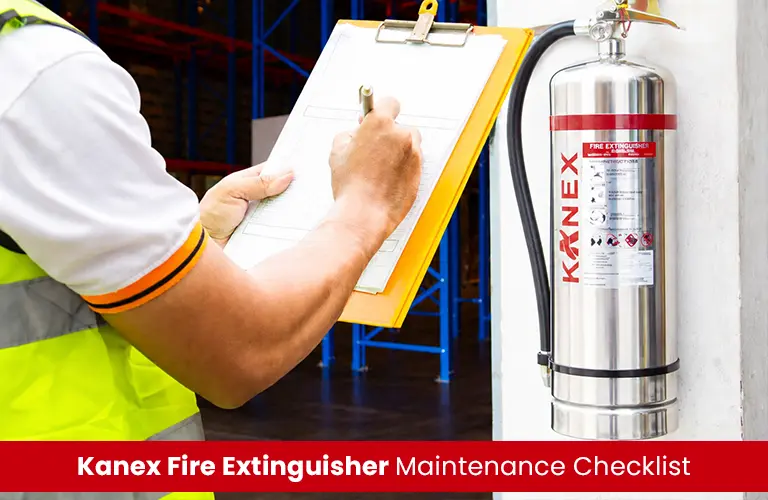
Basic inspections are generally carried out every month by a team of safety personnels or designated staff, who are well versed in the equipment and field. Additionally, to ensure safety standards and regulation of compliance, annual inspections and maintenance should be performed by trained professionals without fail. Such proactive measures and compliance with fire safety standards can make all the difference during serious emergencies and smoothen the inspection process for fire safety authorities.  

Why Regular Fire Extinguisher Inspections Are Important  

Ensures the Extinguisher Works During Emergencies

  • Fire emergencies are immediate urgencies that spare you no time for formalities and routine checks. Every second matters. 
  • And during such emergencies, a faulty extinguisher could be nothing other than a nightmare—especially when it fails during a fire, worsening even small fires. 
  • Regular inspections ensure the performance of the equipment. It makes sure the extinguisher stays intact, fully charged, accessible, and ready for immediate use when needed.

Helps Detect Problems Early

  • As time goes by, fire extinguishers can become susceptible to leaks, corrosion, dents, damaged hoses, or pressure loss.  
  • With routine inspections, one can become aware of these problems before they become dangerous or serious.  
  • It will also push you to make the necessary replacements beforehand, minimizing the chance for escalations or costly incidents in the future. 

 Improves Workplace and Home Safety

  • Being aware of your safety equipment’s functionality and working status can bring you peace of mind. Since you’re expecting it to work perfectly, you can confidently bring the extinguisher to a fire hazard.  
  • Regular fire extinguisher inspections also help make a place safer and more protected. By increasing the availability of extinguishers, protecting people, property, and valuable assets from fire-related damage can be managed effectively. 

Supports Legal and Safety Compliance

  • Many industries and organizations are required to conduct regular fire extinguisher inspections as part of their responsibilities towards fire safety and fire prevention.  
  • Also, maintaining inspection records can save businesses from potential fines or penalties, provided they comply with fire safety regulations, insurance requirements, and workplace safety standards. 

Extends Equipment Lifespan

  • Proper fire extinguisher inspection and maintenance help keep fire extinguishers in optimal conditions for longer periods.  
  • By addressing minor issues early, organizations can extend the lifespan of their equipment and reduce unnecessary repair or replacement expenses.  

You can easily browse fire and safety products online and make an educated decision to reinforce your properties with the right fire safety product.   

Common Issues Found During Inspections  

Regular inspections can effectively map out problems that could occur or prevent a fire extinguisher from functioning properly. Some of the most common issues that arises during regular inspections include: 

  • Low pressure levels 
  • Broken or missing safety seals 
  • Missing inspection tags or maintenance records 
  • Corrosion, rust, or physical damage 
  • Damaged hoses or nozzles 
  • Obstructed or inaccessible extinguisher locations 
  • Expired or overdue maintenance schedules 

Timely identifying these issues and correcting them promptly ensures your fire extinguisher is charged and deployment-ready during emergencies. Also, when you buy fire extinguisher online, ensure it meets safety standards and is properly certified to avoid these common issues.  

Conclusion 

Safety procedures, checkups, and inspections are obligatory processes that exist to safeguard people, property, and the environment. Regular fire extinguisher inspections are integral for any fire safety program because they ensure the equipment is service-ready, safe for the occupants, can protect valuable assets, and support compliance with fire safety regulations. 

What might seem like a simple inspection routine could be the life-changing factor that saves lives when danger strikes. At Safetik, the best firefighting company in Kerala, we understand how vital a reliable fire protection is, for people and their properties. Our fire safety solutions and inspection services are best in the industry, and can help businesses, institutions, and property owners maintain a trustable, fully functional, and compliant fire extinguisher that is ready for use during fire hazards. Choose wise, invest smartly, and conduct regular inspections today to prevent serious consequences tomorrow.  

How to Choose the Right Kanex Fire Extinguisher for Your Business

A fire won’t wait for chances or conveniences to flare up, and you cannot know in advance when they do – that’s why it’s something you should look out for with priority. Fire safety is not only a legal requirement for businesses – it’s a crucial investment in protecting people, property, and operations.  

And to facilitate that, one must be equipped with the right fire extinguisher to make a change, in the face of an emergency.  As a trusted fire fighting company in Kerala, Safetik values the importance of opting for reliable fire protection solutions.  

While you look for fire and safety products online, be aware of your requirements, and purchase extinguishers that meet fire risks specific to your field. Since each fire type requires different extinguishing agents, be wary of using the wrong type of extinguishers. They can make things much worse and even put lives at stake.  

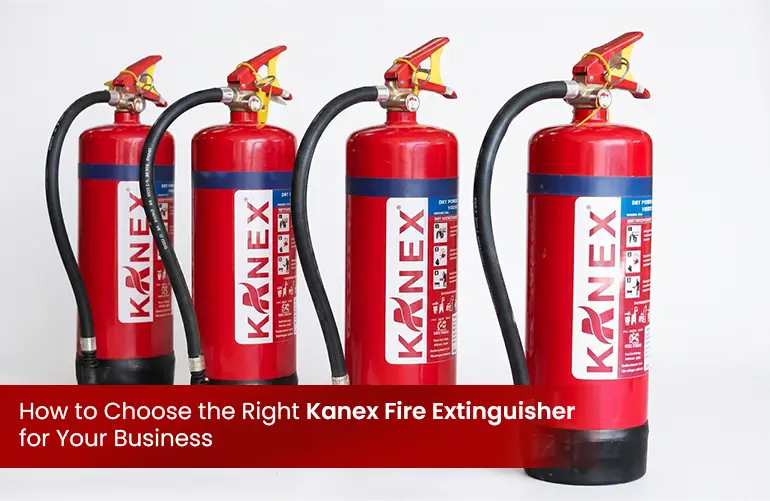
Kanex Fire Extinguishers are widely acknowledged for their quality, reliability, and adherence to safety standards, making them the preferred contingency for any type of fire. 

This Kanex fire extinguisher selection guide will assist your selection of the most suitable extinguisher for your business environment.  

Why Choosing the Right Fire Extinguisher Matters 

Safety is one of the most important factors that must be strictly enforced everywhere. To uphold fire safety compliance and workplace protection, it’s essential to select an apt fire extinguisher.  

For businesses, it’s their responsibility to safeguard valuable assets-employees, customers, and property. Possessing the right extinguisher can easily help control fire hazards right at their breakout stage, preventing spreading, flare-ups, or causing extensive damage.  

But to properly understand fire, you need to have an understanding of their classifications. Each fire hazard has a different response to extinguishing agents, which is why the ideal selection of a fire extinguisher matters and should never be overlooked.

Understanding Fire Classes Before Choosing a Kanex Fire Extinguisher 

Before you make a purchase, you should have an idea on how to choose Kanex fire extinguisher.  Let’s break it down here –  

Class A Fires 

  • Class A fires generally involve risks involving solid combustible materials that are solid in nature.  
  • They are among the most common fire risks in offices, commercial buildings, and schools. 
  • They can be put out using water and foam. 
  • Examples: Solid materials like paper, wood, cloth, cardboard  

Class B Fires 

  • Class B are fire risks involving flammable liquids. 
  • They are more common in industrial places where flammable liquids are used in high quantities. 
  • They can be put out effectively using foam or powder. 
  • Examples: Cleaning fluids, diesel, petrol, paints, solvents, adhesives, etc. 

Class C Fires 

  • Class C fires generally mean fires that are caused by energized electrical equipment. 
  • They are extremely dangerous because of the hazard of electric shock that comes with these electrical fires. 
  • They can be put out using CO₂ or dry chemical extinguishers. 
  • Never use water to put out Class C fires, as it might increase the risk of electrocution. 
  • Examples: servers, electrical panels, power tools, office equipment, etc. 

Class D Fires 

  • A generally rare but serious type of fire cases caused by combustible metals.   
  • They are most notably seen in areas like labs, factories, or industrial settings. 
  • You can go for Class D powder-type extinguishers to mitigate metal fires. 
  • Example: Sodium, Titanium, Lithium, Magnesium, etc. 

Class K/F Fires 

  • Fires involving cooking oils, animal fats, or grease at extreme heat levels. 
  • Most seen in commercial kitchen environments. 
  • Wet chemical extinguishers work best for Class K/F fires. 
  • Examples: Deep fryers, stovetops, ovens, etc.

Key Factors to Consider When Choosing a Kanex Fire Extinguisher 

 Identify Fire Risks in Your Workplace 

  • Start with an in-depth fire risk assessment. Map out potential sources of ignition, combustible materials, electrical equipment, and operational hazards. This will give you an idea of ‘what’ and ‘where’ in the time of crisis. 
  • Pinpoint areas of high risk within your premises and map out locations where fire incidents are most likely to occur.  
  • Since different industries face unique fire risks and challenges, it’s very crucial for this Kanex fire extinguisher selection guide to prepare a comprehensive risk assessment. 

Consider the Type of Business 

  • Offices – They are susceptible to Class A and Class C fires
  • Manufacturing units – Mixed fire risks since the operations could involve chemical, electrical, and combustible material hazards. It’s highly susceptible to Class A, Class B, Class C, and Class D fires. 
  • Warehouses – Susceptible to Class A, Class B, and Class C fires since they can be affected by high quantities of combustible goods and packaging materials
  • Retail stores – Susceptible to Class A, Class B, and Class C fires since there’s the possibility of catching fire from the inventory or electrical systems
  • Restaurants and commercial kitchens – Susceptible to Class K/F fires, involving cooking oil and grease fire hazards.
  • Educational institutions and healthcare facilities – Susceptible to Class A and Class C fires. 

Select the Appropriate Extinguisher Agent 

  • Water-based extinguishers are ideal for Class A fires, involving paper, textiles, wood, etc.  
  • Dry powder extinguishers are highly versatile agents that can handle Class A, B, and C levels of fires in any environment 
  • CO₂ extinguishers is the most suitable agent for electrical regions containing sensitive electronic equipment, like in an office. 
  • Foam extinguishers are highly useful for countering fires when flammable liquids are present, most notably Class A and B fires. 
  • Clean agent extinguishers are designed to protect electronic equipment and valuable assets without leaving residue. 

Evaluate Extinguisher Capacity 

Fire extinguishers offer multiple options that are suitable for a specific level of fire intensity. From small extinguishers offering ease of handling, to medium and large extinguishers that might feel heavy but offer high efficiency and fire control.  

  • There are various factors to consider before purchasing one:  
  • The size of the protected area 
  • Levels of Occupancy  
  • The nature of fire risks 
  • Ease of usage during emergencies and dangers. 

Choose an extinguisher with the appropriate capacity and extinguishing agent to meet your site’s fire protection needs while ensuring safe operation by occupants.  

Check Compliance and Safety Standards 

  • Quality and standardized fire safety equipment that are in adherence to safety guidelines and regulations and meet applicable standards must be your main selection. 
  • Quality-tested Kanex fire extinguishers are highly dependable in delivering effective performance and compliance with workplace safety requirements. Just as our safety tools never compromise quality, you should never yield to any fire extinguisher that fails to meet the required safety standards. 
  • A fire extinguisher is an equipment that holds serious value during fire hazards. Reliable products significantly reduce operational risks and offer greater confidence during emergency situations. 

Placement and Accessibility Considerations 

What would be the purpose of a fire extinguisher if you couldn’t access it in the event of danger?  

  • That’s why it’s very important to think of a strategic placement to keep the equipment – one from where you can easily access it. Install them close to exits, high-risk zones, and frequently occupied areas.  
  • Always ensure that extinguishers remain unobstructed and clearly marked with proper signage. 
  • Make sure to conduct training for employee awareness regarding the location/placement of the extinguishers and the technique to use them. This allows for calm response during real emergencies.    

Avoiding these mistakes can significantly improve workplace safety and compliance. 

Common Mistakes to Avoid When Selecting a Fire Extinguisher 

While purchasing fire safety equipment, be wary of committing the following mistakes –  

  • Choosing based on price alone – Don’t be ignorant with pricing safety equipment. Purchasing cheaper or budget-friendly options could compromise your safety and might not work efficiently during specific fire tasks
  • Ignoring fire risk assessments – Overlooking fire risk hazards can lead to poorly addressed fire protection and might even leave dangerous hazards unattended.  
  • Selecting incorrect extinguisher types – This will flare up the fire emergency further and affect the effectiveness of your response.
  • Overlooking maintenance requirements and inspection – The problem is when the fire extinguishers fail to function when it matters the most.
     
  • Insufficient extinguisher coverage – Will leave parts of your property unprotected and susceptible to fire spreading. 

Conclusion 

Purchasing a fire extinguisher is not a namesake buy and mount formality that a property should follow. It’s an essential precautionary measure that helps mitigate fire hazards, through means like – understanding fire classifications, evaluating workplace hazards, selecting the appropriate extinguishing agent, and ensuring proper placement. 

In this Kanex Fire Extinguisher selection guide, we help you understand the importance of matching extinguisher types to your business’s specific fire risks or potential hazards. By properly understanding how to choose Kanex fire extinguisher solutions, a business can enhance safety, protect valuable assets, and be a responsible entity that remains compliant with fire safety regulations.

At Safetik, we strive to improve workplace safety by combining industry expertise with a comprehensive knowledge of fire and safety products online to help businesses make educated decisions. Whether you are looking for a trusted fire fighting company in Kerala or planning to Buy Fire Extinguisher online, our team of skilled professionals can assist in the selection of the most compatible Kanex fire safety equipment that aligns with your specific requirements and ensure your workplace remains protected.  

×