What Is the PASS Method for Using a Fire Extinguisher?

A fire emergency could happen out of the blue due to human negligence, electrical issues or simply when people least expect it. But your immediate response to the incident can make a significant difference – if done right. 

Whether you are at home, in an office, or managing a commercial space, understanding how to use a fire extinguisher knowledgeably can help you act promptly in response to a small fire. And one of the easiest ways to handle a fire extinguisher, even for a rookie, is to know the PASS method, which stands for Pull, Aim, Squeeze, and Sweep.  

If you are looking for a reliable fire fighting company in Kerala, or want to explore fire and safety products online, learning fundamental fire-extinguisher safety is essential – which is exactly what this blog will cover through the basics of the PASS method. 

What Does PASS Stand For? 

The PASS technique for fire extinguisher use essentially breaks down into four simple steps: 

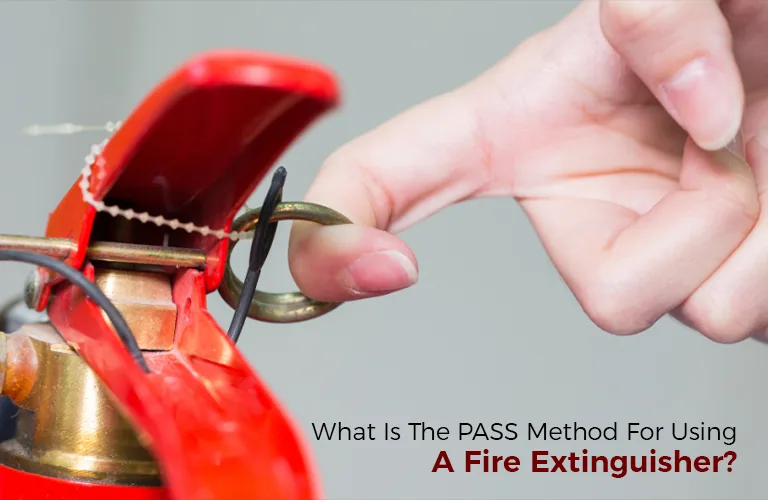
P (Pull) – Pull the safety pin to unlock the extinguisher. 

A (Aim) – Equip the extinguisher and aim the nozzle or hose at the fire spot. 

S (Squeeze) – Squeeze the operating lever of the extinguisher to discharge the extinguishing agent. 

S (Sweep) – Sweep the nozzle from side to side across the base of the fire. 

By following these four important steps correctly, you can easily use and handle a fire extinguisher responsibly and more effectively whilst maintaining a safe position. 

Step 1: Pull the Safety Pin 

The safety pin keeps the extinguisher locked and prevents accidental discharge. When the need arises, you can operate the extinguisher by firmly pulling the pin out of the handle to unlock the handle. Always keep the extinguisher upright during its usage. Avoid unnecessary removal of the safety pin, especially when you’re not ready to act.Once the pin is removed, keep your attention on the fire and your escape route. 

Step 2: Aim at the Base of the Fire 

A common mistake that people often make is to aim the extinguisher directly at the flames. This is not essentially ineffective but a common misconception of the fire extinguishing process – since the flames are merely the visible part of the fire, not its source. The best method instead is to aim the nozzle at the base of the fire, where the burning material is located. Ensure to maintain a safe distance as stated in the extinguisher instructions and avoid unnecessary movement in the direction of the flames. In simple words, controlling the source of the fire is your main objective, rather than targeting visible flames. 

Step 3: Squeeze the Handle 

Once the nozzle is positioned correctly, firmly squeeze the operating handle of the extinguisher to release the extinguishing agent effectively. While operating the extinguisher, never take your focus off the fire. If the fire gets out of hand and worsens or if the fire extinguisher malfunctions, do not take unnecessary risks or take impulsive actions. Always keep in mind that when the incident escalates, you should move away or keep your distance, evacuate the area, and seek emergency assistance. 

Step 4: Sweep From Side to Side 

The final step in the PASS rule for fire extinguishers is to sweep the nozzle from side to side. Instead of concentrating the extinguishing stream on a single spot, try moving it across the base of the fire, ensuring uniform coverage over the entire affected area. Careful and responsible behavior is required at all times. Do not immediately turn your back and walk away from the fire. Carefully watch it and keep in mind that a fire can reignite even after it appears to be put out. In case the flames do return, evacuate everyone from the area and seek professional help rather than trying to fight a flaring fire. 

Why Fire Extinguisher Training Matters 

Remember, theory is one thing, and practical is another. Knowing the PASS method for fire extinguishers is quite useful, but that alone won’t suffice for practical training. 

  • Hands-on fire-safety training can assist employees with the essential handling techniques to use an extinguisher responsibly during emergencies. 
  • Businesses and major institutions should mandatorily provide appropriate fire-safety training to ensure the employees are well aware of the safety exits and are capable of operating the fire extinguishers maturely.  
  • Fire extinguishers and other fire safety requirements should be inspected, updated, and maintained regularly to remain operation-ready when the need arises. 
  • Another important factor in fire safety is “Which fire extinguisher to use during each type of fire? The extinguishers vary according to the type of extinguishing agent used, spanning from water and foam to CO and powder. These variants are designed for different fire risks according to their classification (Class A-F). 

So always follow the manufacturer’s instructions and seek professional guidance, when necessary, rather than trying to handle everything yourself. 

Conclusion 

Remembering Pull, Aim, Squeeze, Sweep makes the PASS technique for fire extinguishers use easy to recall when the moment turns critical and every second matters. However, always prioritize personal safety with seriousness, because attempting to fight a fire shouldn’t come at the expense of your life. 

Only attempt to extinguish a fire, if it’s small and when the conditions are comparatively safer – a clear escape route and confidence in operating the extinguisher. If the fire is flaring up, spreading rapidly and filling the place with smoke – evacuate immediately and contact emergency services. 

At Safetik Safety Solutions, a Kerala-based fire and safety solutions company, you receive high-end firefighting equipment and tools like fire extinguishers, fire suppression systems, refilling and maintenance, and other safety products and services. If you are planning to buy fire extinguisher online or need professional fire-safety solutions, Safetik is the choice you can count on for all your requirements. 

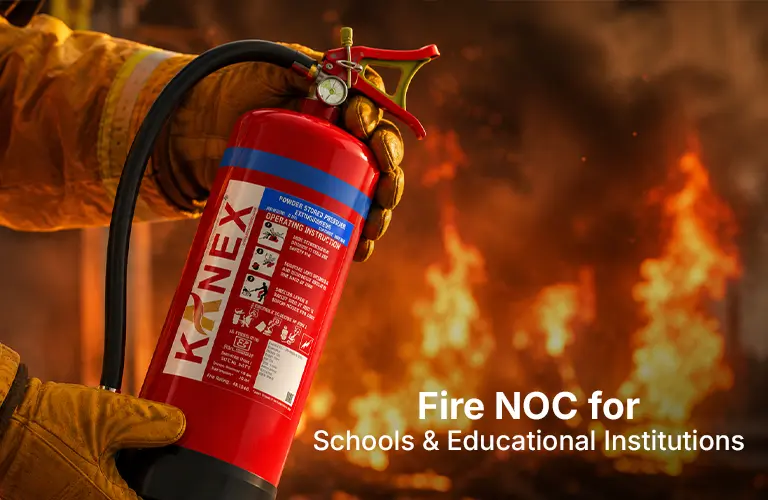
Fire NOC for Schools and Educational Institutions

School infrastructure is a highly lively and busy location where hundreds of children, teachers, and staff spend multiple hours every day. In the event of an unforeseen emergency like fire, even the slightest delay in evacuation can lead to serious consequences and worser repercussions. That is why fire safety is an essential life safety aspect that is more than a mere formality. From proper extinguishers and alarms to safe evacuation routes, every measure matters.  

For educational institutions prioritizing fire safety with utmost importance and pursuing a reliable safety support, working with a firefighting company or sourcing fire and safety products online is a highly effective option that can help ensure that essential equipment is available and properly maintained. 

What is a Fire NOC?  

  • A fire NOC (No Objection Certificate), generally known as a fire safety certificate is an official document that is issued by local fire department or fire safety officer to confirm whether a building infrastructure has met the appropriate fire safety norms and requirements. 
  • The inspection mainly considers factors that are of immediate use during a fire incident, such as fire protection systems, emergency exits, access for firefighting equipment, fire alarms, extinguishers, hydrant arrangements, and other safety provisions applicable to the building. 

Eg – CBSE requires affiliated schools to comply with applicable state or municipal fire safety requirements, with the certificate being issued either by the government fire department or authorized local authority, as applicable. 

Why Schools Need a Fire NOC  

A fire NOC is more than just a formality; it upkeeps the proper maintenance of safety equipment that should be operation-ready in the event of an emergency. Legal compliance is highly necessary for school recognition and affiliation with boards such as CBSE and state boards. 

But more importantly, it helps reinforce the following  –  

  • Protecting Children and Staff – Schools are generally filled with children and staffs, but when an emergency occurs, it’s the younglings that might need more assistance – particularly because they may not respond quickly or understand how to evacuate safely. With a systematic and properly planned fire safety system, confusion can be avoided, and evacuations can be facilitated faster.
  • Insurance and Liability Protection – Fire safety certification is an essential part of the regulatory and affiliation requirements applicable to educational institutions, like for instance, in CBSE schools, they are required to observe applicable state and municipal fire safety requirements.
  • Therefore, the maintenance of a valid and authentic NOC for schools exceeds the status of mere paperwork and serves as evidence that the institution is actively fulfilling its safety responsibilities.
  • Builds Trust with Parents – An educational institution, be it a school or college with well-equipped and maintained fire protection systems are more responsive and operational-ready in the face of emergencies. This reassures parents, boosting their confidence that the institution is committed to safety and values it seriously.  

Fire Safety Requirements Schools Must Meet 

Each building has varying requirements – occupancy, location, height, and applicable regulations. For fire NOC requirements for schools, the most common provisions include the following: 

  • Equipping adequate fire extinguishers at every level of the floor, at appropriate locations offering ease of access. 
  • Clear and visible emergency exit markings and unobstructed evacuation routes.
  • Installation of fire alarms and smoke detection systems at required places. 
  • Adequate water storage, hydrants, and associated firefighting arrangements where applicable. 
  • Safe and compliant installation of electrical systems, ensuring no exposed or damaged wiring is present, and all connections are secure.  
  • Emergency lighting and appropriate safety signage. 
  • Conduct regular fire drills and evacuation exercises to make people ready for emergencies. 
  • Proper and easy access for emergency and firefighting services to all.

These are some of the essential safety measures that should be installed, inspected, and maintained regularly to ensure compliance with fire NOC for educational institutions. As a leading firefighting company in Kerala, Safetik ensures secure and compliant firefighting services by providing fire extinguishers, fire suppression systems, hydrant systems, alarm systems, refilling, and maintenance services helping educational institutions actively ready for emergencies. 

Step-by-Step Process to Get Fire NOC 

Acquiring a fire NOC varies from one jurisdiction to another, but the process generally involves the following stages: 

Step 1: Submit the applicationThe designated and authorized representative or the school submits an application to the relevant fire department or body of authority. 

Step 2: Submit required documentsEssential documents, including the approved building plan, ownership or occupancy proof, details of the building, and information about installed fire safety equipment, are submitted firsthand to prove total compliance. 

Step 3: Site inspectionFire officials inspect the premises in detail to assess whether the required level of safety arrangements has been provided and is totally operational. 

Step 4: Rectify deficiencies- If any shortcomings such as blocked exits, inadequate equipment, or unsafe installations are identified in the process, the school must justify the deficiencies and ensure necessary rectifications before getting approval. 

Step 5: Certificate issuance- Upon verification of total compliance with the applicable safety standards, the responsible authority grants the Fire Safety Certificate/NOC, as applicable. 

Common Reasons Schools Fail Fire NOC Inspection  

The most common issues that can cause problems during inspection often result from careless or negligent actions that could be avoided with proper attention.  

  • Blocked and poorly marked emergency exits.
  • Expired, poorly maintained, damaged, or malfunctioning fire extinguishers. 
  • Lack of documented fire drills and fire safety awareness activities. 
  • Obstructed evacuation pathways and exits.
  • Poor and unsafe electrical maintenance. 

Regular inspections help map out potential problems and help rectify them before an official inspection. 

Validity & Renewal – 

  • A Fire NOC doesn’t necessarily have a specific universal validity period across India. The validity and renewal requirements mostly depend on conditions like the state, local authority, type of building, and applicable regulations. 
  • Educational institutions should check the expiry date in their certificate and begin the renewal process well in advance.  

Conclusion 

fire NOC for schools is not to be overlooked merely as a document of compliance – it represents a commitment to protecting students, teachers, and staff. An emergency does not wait to happen; it’s a quick unfolding of unprecedented events that requires calm and composed handling. Understanding the fire NOC requirements for educational institutions and keeping fire protection systems well maintained can be the life saver during such emergencies. In essence, it is a commitment where preparedness must be treated as an ongoing responsibility.  

If your institution requires professional guidance, equipment, installation, inspection, or maintenance, Safetik is a Kerala-based fire safety solutions provider serving schools and educational institutions. You can rely on a trusted firefighting company in Kerala, procure high-quality fire extinguishers online, and establish dependable, operational fire safety systems that keep your campus safe when it matters most. 

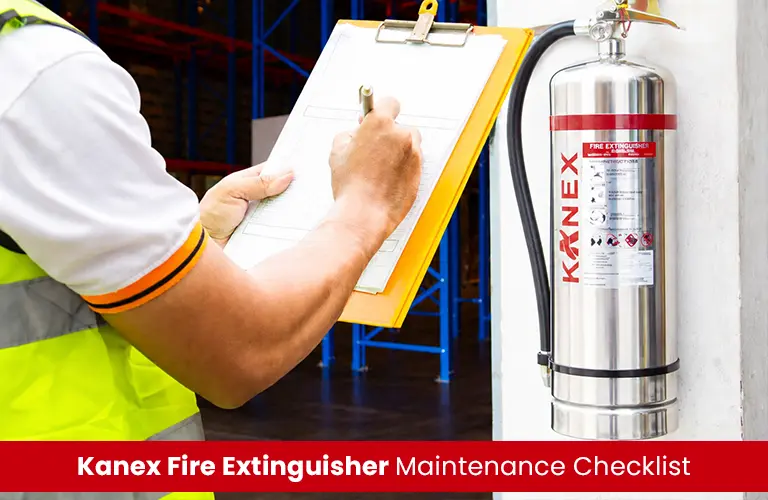
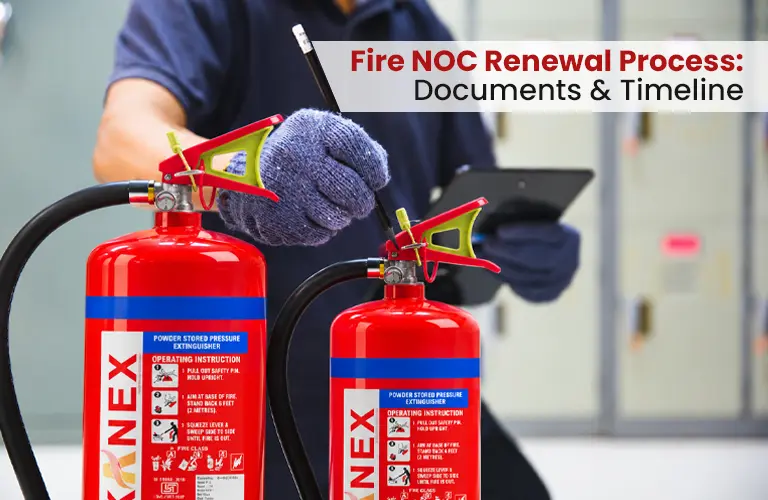
Kanex Fire Extinguisher Maintenance Checklist

A fire extinguisher is a contingent measure that remains on standby until an emergency arrives, when it’s required to work without fail. Regular inspection and maintenance keep an eye on the extinguisher’s reliable performance in homes, offices, factories, warehouses, hospitals, hotels, and commercial buildings when it matters most. 

As a trusted firefighting company in Kerala and an authorized Kanex dealer, Safetik provides high-quality fire extinguishers, timely maintenance, refilling, and other essential fire safety solutions. Through this Kanex fire extinguisher maintenance checklist, readers will gain insight on the essential checks needed to keep your extinguisher safe, accessible, and ready for use. 

Why Fire Extinguisher Maintenance Is Important  

A tool is only useful if it’s accessible and deployable when needed at most. Similarly, a fire extinguisher is only reliable if it is easily accessed, charged precisely, and conditionally perfect. The benefit of regular inspections lies in its ability to identify small issues before they become serious problems.  

  1. It helps reduce the risk of the extinguisher failing to operate properly during emergencies, even if it’s one of the smallest margins of errors. 
  2. Diligent checks and regulatory maintenances help ensure total compliance with workplace and fire safety regulations.
  3. Extends the lifespan and operationality of the extinguisher.  
  4. Trims down potential costs arising from avoidable replacement and repair costs by identifying problems early and taking actions appropriately.  

Kanex Fire Extinguisher Maintenance Checklist 

Check the Pressure Gauge 

  1. Always ensure the pressure gauge is working without any issues, because it indicates whether the extinguisher is effectively functional. 
  2. Make sure the needle is within the green zone, which is often understood as the optimal range for the extinguisher’s internal pressure to spray its contents. 
  3. If the pressure is low or high, the needle will move away from the green zone, over to the red.  
  4. A low-pressure red means that the tool is not pressured enough for ideal spraying conditions, whereas a high-pressure red warns of potential rupturing. 

Inspect for Physical Damage 

  1. Examine the tool carefully and look for any dents, rust, corrosion, or cracks on its surface or components.  
  2. Make sure there is no leakage or damaged parts that could inflict danger to the user or fail the extinguisher’s functionality during emergencies.  

Verify the Safety Pin and Seal 

  1. Make sure the safety pin is fitted in properly and the tamper seal is intact.  
  2. A broken or absent seal reveals the status of the extinguisher – a chance that it has been used before. 
  3. Ensure to have it checked and replaced by a proper fire and safety professional.   

Read the Inspection Tag 

  1. Check the inspection or service tag to confirm when the extinguisher was last inspected or serviced.  
  2. Keeping inspection records up to date makes it easier to identify when the next professional service is due. 

Check the Hose and Nozzle 

  1. The hose and nozzle should be in perfect condition to let the contents discharge effectively.  
  2. Examine the hose and nozzle for leakages or blockages, as it could affect the effectiveness of the extinguisher during operation. 
  3. Inspect them to identify cracks or wear and replace them with a safer one. 

Ensure the Label Is Clear 

  1. Make sure to check whether the instructions and labels are easily readable and understandable.  
  2. If these informative labels or instructions ever become faded, damaged, or unclear, replace them immediately with new ones.  
  3. These are extremely pivotal to guide people by making informed and educated decisions without panic during a fire emergency and avoid potential mishandling. 

Confirm Easy Accessibility 

  1. An extinguisher should be clearly visible, easily accessible, and located at an ideal spot that’s both appropriate and within range of use.  
  2. Do not place boxes, furniture, stock, or equipment in front of it – or any obstructions to where it is placed.  
  3. Mount it properly and securely at the location as specified in the fire safety plan.  

Clean the Fire Extinguisher 

  1. Remove dust, dirt, and any contaminants that prevent the proper functioning of the extinguisher.  
  2. Keeping the cylinder clean makes defects easier to identify while effectively tackling the issue of corrosion.  
  3. Avoid any methods of cleaning that could potentially harm or damage the labels, valves, or other components of the fire extinguisher. 

Check the Expiry or Service Date 

  1. Be aware of your tool’s expiry date and when the maintenance service is due.  
  2. Know that extinguishers are to be maintained in accordance with the manufacturer’s instructions and industry standards.  
  3. Refrain from making self-induced assumptions like assuming the quality of an extinguisher just because it appears new.  

Schedule Professional Maintenance 

  1. Mere visual checking is not an alternative for annual servicing by qualified technicians. Make sure to schedule regular maintenance by professionals. 
  2. Hydrostatic testing or additional examinations would be helpful, according to the type, age, condition, and applicable requirements of the fire extinguisher.  

Common Mistakes to Avoid  

Even good maintenance routines could become worthless if basic warning signals are not heeded and overlooked without further checking. That’s why it’s important to avoid these mistakes –  

  1. Any abnormalities or lowering in the pressure reading being ignored carelessly.  
  2. Blocking access to the extinguisher and making it incapable of easy use. 
  3. Overlooking annual inspections and servicing.  
  4. Continuing the usage of extinguishers that are either expired or requires replacement.  
  5. Failing to service and repair damaged components of the tool, such as its seals, hoses, and pressure gauge.  

Conclusion  

Understanding why a Kanex Fire Extinguisher Maintenance Checklist is necessary is very important to implement responsible fire safety management. A monthly visual inspection by safety professional, along with timely professional servicing, can make sure your extinguisher is operational and emergency ready. Not to mention the fact that it extends the service life of the tool and prevents any scope for malfunctioning. 

Those trying to understand how to maintain Kanex fire extinguisher can start by checking the boxes mentioned above and ensure proper adherence to the instructions provided by the manufacturer for your model.  

At Safetik, we provide reliable fire safety solutions, by ensuring easy access for users to purchase fire and safety products, including options to buy fire extinguishers in Kerala. In essence, upkeeping a routine to choose the right equipment and maintaining it properly is more integral than considering it only after the advent of an emergency.

Annual Maintenance Contract Checklist in Fire Safety: What Should Be Included?

Fire safety systems play a crucial role in safeguarding lives and properties during fire incidents and related emergencies. Though regular maintenance is essential for smooth functioning and immediate use, mere installation of the fire safety system won’t be enough. They require routine inspections, testing, and servicing, for seamless performance and effectiveness during a serious fire incident. 

An Annual Maintenance Contract (AMC) is an important annual agreement that helps maintain compliance with safety standards, guidelines, and timely identification of potential problems in the fire safety system. As a pillar of human responsibility to safety, it keeps fire protection systems fully operational and deployment-ready when needed. 

What Is an Annual Maintenance Contract (AMC) in Fire Safety?  

Annual Maintenance Contract (AMC) is a service agreement, usually covering for a year, between a property owner and a fire safety provider for regular inspection, testing, and the maintenance of fire protection equipment like fire alarms, extinguishers, hydrants, sprinkler systems, etc. In simple words, AMC is the cornerstone of effective fire safety maintenance, that ensures your fire equipment is reliable and operational throughout the year.  

Commercial buildings, offices, hospitals, factories, schools, and apartments depend on reliable fire protection systems to keep people, property, and business operations safe. With regular checks and preventive maintenance being carried out occasionally, an AMC can map out potential dangers like damaged or malfunctioning components, identify performance issues, and repair required parts before they escalate into a major threat. 

A well-maintained AMC checklist maintains compliance with fire safety standards and regulatory requirements. It’s a document of proof that verifies equipment inspection and service with adherence to recommended procedures.  

Annual Maintenance Contract Checklist in Fire Safety  

Fire Extinguisher Inspection

Fires could break out without prior-warning, which is why it’s important to have deployment-ready equipment and protective measures.  

  • Check pressure gauge to have an idea of the extinguisher’s operating pressure. 
  • Carefully inspect and examine the device for any issues regarding its physical condition, like  damage, corrosion, or leakage. 
  • Confirming the expiry date of the device and its service validity.  
  • Inspecting the device’s safety pin, seal, and mounting.  
  • Identifying replacement or refill requirements. 

Fire Alarm System Testing

Fire alarm systems are quick response alert systems that provide early warning trigger instantly when there’s a fire/smoke. This early warning facilitates faster evacuation and occupant response.  

The maintenance and testing should be carried out for the following devices –  

  • Smoke detectors  
  • Heat detectors  
  • Manual call points  
  • Alarm sounders  
  • Fire alarm control panel functionality. 

Testing ensures that the alarm systems, which include detection, notification, and control panels, all function effectively.

Fire Hydrant System Inspection

Fire hydrants play a crucial role during firefighting incidents, supplying high-volume water to firefighters for immediate response and fire containment.  

The fire hydrant has mainly 5 essential areas for inspection –  

  • Hydrant valves – Checked to ensure they open, close, and operate properly during emergencies. 
  • Hose reels – Inspecting potential leaks and damages to fix and ensure smoother firefighting operations. 
  • Nozzles – Check for uninterrupted water discharge, blockages, and damage. 
  • Water pressure – Examining the pressure levels to meet the necessary levels for firefighting. 
  • Leakage inspection – General inspection to ensure system efficiency. 

Sprinkler System Maintenance

When activated, the automatic sprinkler system provides immediate response for swift fire suppression. The maintenance should mainly include – 

  • Sprinkler head inspection to identify any blockages or damages. 
  • Conduct a water flow test to measure the amount of water a pipe or system can deliver. 
  • Check the condition of the pipe and its functionality. 
  • Examining control valves and checking if they’re easy to operate. 
  • Testing the Pump operation 

Fire Pumps Testing

Fire pumps are very crucial to maintaining water pressure in firefighting systems. AMC checklist inspections must include it and ensure the following parts:  

  • Main fire pump testing – The ability of the main pump to deliver the right water pressure and flow to the system, quickly assisting the firefighting team. 
  • Jockey pump performance checks – Check the jockey pump’s ability to maintain system pressure and prevent unwanted activations. 
  • Diesel pump testing (where installed) – Makes sure they are functional and can be switched on and off without trouble during a fire incident. 
  • Automatic start and operation testing – Check and confirm the self-activation of fire pumps the second a drop in water pressure is detected.  
  • Pressure performance verification – Measures pump pressure output that is in alignment with the industry’s required firefighting standards.  
  • Proper pump maintenance – Ensures continuous water availability during fire emergencies and immediate use.  

Emergency Exit & Safety Sign Inspection

During a fire emergency, it’s very important to clearly guide people with a safe route out to safety. These clear evacuation signals must be maintained to help people act quickly, without panicking.  

  • Check that the visibility and placement of exit signs are ideal. 
  • Ensure emergency and backup lighting systems are operational to guide people during a power failure. 
  • Clear obstacles from escape routes while making them spacious and accessible. 
  • Verifies the visibility of safety signs during smoke or low-light conditions and sets up illuminated safety signs. 

An organized and properly maintained emergency guidance system helps occupants evacuate safely and move with clarity and less panic during an incident. 

Fire Doors and Safety Equipment

Fire doors and related safety equipment assist in slowing down the fire spread and smoke between different areas of a building. 

Inspection should cover: 

  • Fire door closing mechanisms 
  • Door seals 
  • Panic bars 
  • Overall condition of emergency equipment 

Any damaged or faulty components should be repaired or replaced immediately without delay. This is a responsibility which should show no compromise, under any circumstances.

Documentation and Service Reports

Proper adherence to safety standards means having proper documentation and proof of validation. 

  • Maintain proper records of inspection and observations made. 
  • Record maintenance logs, including servicing activities, previous maintenance works, and equipment checks.  
  • Keep proper documentation of repairs performed, equipment replaced, and faults identified in every inspection performed. 
  • Provide genuine and valid proof that fire safety systems are compliant and meet the required standards and regulations. 
  • Potential issues and problems are marked and included in future service recommendations. 
  • Detailed reports help organizations track equipment performance and fire protection systems and plan timely maintenance activities. 

Conclusion   

From this blog, it’s clear that fire safety is not limited to the installation of protective equipment alone. Regular inspection processes, system testing, and servicing are very important to ensure seamless firefighting capabilities when lives and properties are at stake. With a comprehensive Annual Maintenance Contract checklist in fire safety, organizations can be well-equipped, better prepared, compliant, and reduce potential threats arising from fire incidents.  

Safetik, a leading firefighting company in Kerala, provides professional and reliable fire safety solutions designed to support businesses and properties with meticulous inspections, maintenance services, and quality safety equipment.  

As a trusted provider of fire and safety products online, we are known for helping organizations improve workplace safety through the effective facilitation of fire prevention and preparedness. Partnering with reputed fire extinguisher dealers in Kerala ensures expert guidance, quality servicing, and long-term reliability for your fire protection systems.

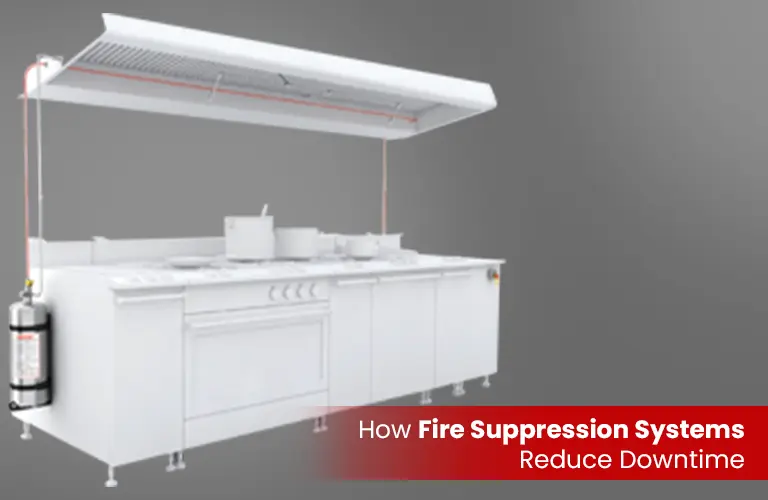
How Fire Suppression Systems Reduce Downtime

Fire accidents are unprecedented accidents that can bring businesses to an abrupt halt, leading to operational disruptions and financial losses. Even the smallest spark could lead to a fire that ends up damaging expensive products, destroying important documents, affecting production, and even compromising the safety of a workplace. 

A professionally designed advanced fire suppression system provides swift and seamless response through early detection and control of fires before they flare up. By minimizing damage and preventing longer shutdowns, these highly useful fire systems help businesses reduce service interruptions (downtime), protect valuable assets, and resume normal operations immediately. 

In this article, we will help you understand how fire suppression systems help reduce downtime and why it’s essential for all businesses.  

What Does Business Downtime Mean?  

Business downtime is a period of total inactivity where organizations cannot operate at all due to unexpected events like fire. During this time, the entire business halts its essential functions; employee workflow is temporarily stalled, and customers might face delays in service or product delays.  

The impact of downtime can include: 

  • Production and manufacturing delays 
  • Lost sales and reduced revenue 
  • Employee productivity interruptions 
  • Costly equipment repairs or replacements 
  • Customer dissatisfaction 
  • Reputational damage 

Even a fraction of time lost can inflict financial consequences upon the business, making fire protection an extremely essential aspect for business continuity. 

How Fire Suppression Systems Help Reduce Downtime  

Detect Fires Early 

  • Modern fire detection systems utilize highly advanced sensors to identify smoke, heat, or flames almost immediately after its formation.  
  • When a danger is detected early, immediate action can be taken to prevent the fire from flaring out to other places or buildings.  
  • This swift response helps contain hazardous escalations effectively while avoiding prolonged operational disruptions.  

Control Fires Automatically 

  • Modern technology has evolved automation to a point where manual action has less burden in deescalating issues.  
  • The sensors get triggered, and the system instantly responds automatically – all without manual intervention.  
  • This rapid response minimizes damage to equipment, inventory, and property while reducing further repairs. 

Protect Critical Equipment 

  • Most businesses rely on extremely valuable assets like servers, electrical panels, manufacturing machinery, communication systems, and other valuable assets.  
  • That’s why they install highly effective fire suppression systems that control the fire from escalating before they severely damage the assets.  
  • Preserving essential equipment helps businesses control the need for excessive repairs and lengthy replacements while enabling operations to move seamlessly with minimal interruption. 

Minimize Business Interruptions 

  • Swift containment helps facilitate faster cleanup and restoration. 
  • This helps limit the damage through fewer repairs, reduced operational delays, and a quicker resumption of business activities, minimizing revenue loss, and maintaining customer confidence without further escalation. 

Improve Employee Safety 

  • During a fire emergency, human safety is the no. 1 priority. Businesses should make sure to buy fire suppression systems that are highly effective and installed optimally. 
  • An effective fire suppression system creates a safe workplace, reassuring the employees, and effectively controls fires rapidly without excessive exposure to dangerous smoke and flames.  
  • Protecting employees not only prevents injuries but also allows businesses to recover and resume operations more efficiently after the emergency.  

Additional Benefits Beyond Reducing Downtime  

The benefit of investing in a fire suppression system lies in its ability to control hazardous fire incidents and minimize operational interruptions effectively before they escalate into worser issues. 

Some of the most useful benefits are – 

  • Protects valuable business assets, inventory, equipment, and other essential resources. 
  • Early prevention or immediate response can reduce repair costs, replacement, and restoration costs.  
  • Supports business continuity and initiates disaster recovery significantly faster.  
  • Makes organizations responsible and compliant with fire safety regulations and industry standards. 
  • Build customer trust and boost their confidence by showcasing your commitment to safety. 
  • May help in the reduction of insurance risks and insurance premiums. 
  • Improves workplace safety and operational resilience, making dangers more manageable. 

Conclusion  

Fire suppression systems deserve more credit than what people give them credit for. They play a vital role in reducing business downtime through early detection and the controlling of fires before they flare up into a worse incident.  

This rapid response is the cornerstone of workplace safety that safeguards employees, valuable equipment, critical infrastructure, and business operations, enabling fast recovery and containing financial losses.   

At Safetikwe prioritize reliable fire suppression solutions that are ideally tailored to the unique needs of commercial, industrial, and institutional facilities more than anything. From the initial design of the system, its installation, testing, and maintenance, to the continuous support provided by our team, we strive to help businesses maintain a safe environment and ensure uninterrupted operations. 

That’s why it’s very important to invest in the right fire and safety products onlinelike with Safetik, a trusted firefighting company in Kerala, where reliable fire safety solutions are served to help reduce downtime and keep your operations running. 

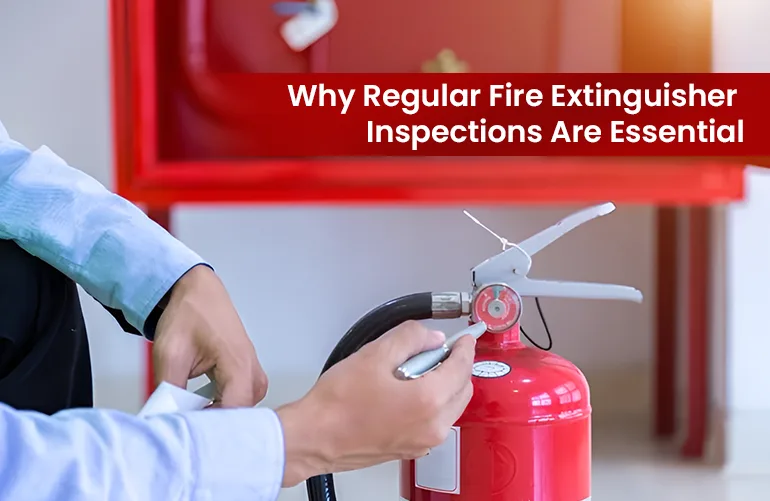
Why Regular Fire Extinguisher Inspections Are Essential

Fire safety is a critical responsibility for protecting both people and property alike. It requires a proactive approach, as emergencies could occur unexpectedly and without warning at any time. Being prepared with the right fire protection equipment means you are capable of quick response, limiting the danger on people, property, and the surrounding environments.  

However, simply installing a fire extinguisher is not enough; it’s an ongoing responsibility that should be taken seriously. Partnering with a trusted firefighting company in Kerala like Safetik, helps ensure your equipment remains service-ready and fully functional when it matters most. 

A neglected or faulty extinguisher can pose a serious danger, especially if it fails to work effectively during emergencies, threatening life and property alike. In this blog, we’ll explore the fundamentals of fire extinguisher inspections, and why they are extremely crucial for maintaining a safe and secure environment.  

What Is a Fire Extinguisher Inspection?  

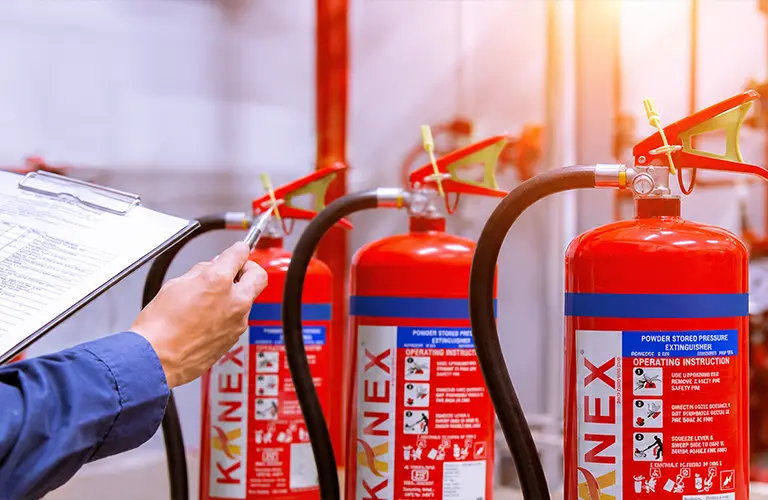
A fire extinguisher inspection basically is a routine examination conducted on fire extinguishers to verify its functionality – whether it is in proper working condition and ready for immediate use. These essential inspections help identify potential issues such as damage, leaks, missing components, or low pressure that could drastically affect performance in the face of an emergency. 

Basic inspections are generally carried out every month by a team of safety personnels or designated staff, who are well versed in the equipment and field. Additionally, to ensure safety standards and regulation of compliance, annual inspections and maintenance should be performed by trained professionals without fail. Such proactive measures and compliance with fire safety standards can make all the difference during serious emergencies and smoothen the inspection process for fire safety authorities.  

Why Regular Fire Extinguisher Inspections Are Important  

Ensures the Extinguisher Works During Emergencies

  • Fire emergencies are immediate urgencies that spare you no time for formalities and routine checks. Every second matters. 
  • And during such emergencies, a faulty extinguisher could be nothing other than a nightmare—especially when it fails during a fire, worsening even small fires. 
  • Regular inspections ensure the performance of the equipment. It makes sure the extinguisher stays intact, fully charged, accessible, and ready for immediate use when needed.

Helps Detect Problems Early

  • As time goes by, fire extinguishers can become susceptible to leaks, corrosion, dents, damaged hoses, or pressure loss.  
  • With routine inspections, one can become aware of these problems before they become dangerous or serious.  
  • It will also push you to make the necessary replacements beforehand, minimizing the chance for escalations or costly incidents in the future. 

 Improves Workplace and Home Safety

  • Being aware of your safety equipment’s functionality and working status can bring you peace of mind. Since you’re expecting it to work perfectly, you can confidently bring the extinguisher to a fire hazard.  
  • Regular fire extinguisher inspections also help make a place safer and more protected. By increasing the availability of extinguishers, protecting people, property, and valuable assets from fire-related damage can be managed effectively. 

Supports Legal and Safety Compliance

  • Many industries and organizations are required to conduct regular fire extinguisher inspections as part of their responsibilities towards fire safety and fire prevention.  
  • Also, maintaining inspection records can save businesses from potential fines or penalties, provided they comply with fire safety regulations, insurance requirements, and workplace safety standards. 

Extends Equipment Lifespan

  • Proper fire extinguisher inspection and maintenance help keep fire extinguishers in optimal conditions for longer periods.  
  • By addressing minor issues early, organizations can extend the lifespan of their equipment and reduce unnecessary repair or replacement expenses.  

You can easily browse fire and safety products online and make an educated decision to reinforce your properties with the right fire safety product.   

Common Issues Found During Inspections  

Regular inspections can effectively map out problems that could occur or prevent a fire extinguisher from functioning properly. Some of the most common issues that arises during regular inspections include: 

  • Low pressure levels 
  • Broken or missing safety seals 
  • Missing inspection tags or maintenance records 
  • Corrosion, rust, or physical damage 
  • Damaged hoses or nozzles 
  • Obstructed or inaccessible extinguisher locations 
  • Expired or overdue maintenance schedules 

Timely identifying these issues and correcting them promptly ensures your fire extinguisher is charged and deployment-ready during emergencies. Also, when you buy fire extinguisher online, ensure it meets safety standards and is properly certified to avoid these common issues.  

Conclusion 

Safety procedures, checkups, and inspections are obligatory processes that exist to safeguard people, property, and the environment. Regular fire extinguisher inspections are integral for any fire safety program because they ensure the equipment is service-ready, safe for the occupants, can protect valuable assets, and support compliance with fire safety regulations. 

What might seem like a simple inspection routine could be the life-changing factor that saves lives when danger strikes. At Safetik, the best firefighting company in Kerala, we understand how vital a reliable fire protection is, for people and their properties. Our fire safety solutions and inspection services are best in the industry, and can help businesses, institutions, and property owners maintain a trustable, fully functional, and compliant fire extinguisher that is ready for use during fire hazards. Choose wise, invest smartly, and conduct regular inspections today to prevent serious consequences tomorrow.  

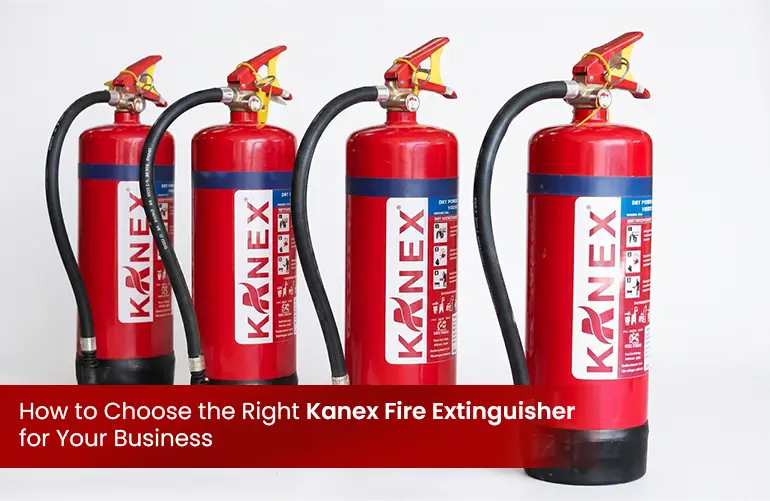
How to Choose the Right Kanex Fire Extinguisher for Your Business

A fire won’t wait for chances or conveniences to flare up, and you cannot know in advance when they do – that’s why it’s something you should look out for with priority. Fire safety is not only a legal requirement for businesses – it’s a crucial investment in protecting people, property, and operations.  

And to facilitate that, one must be equipped with the right fire extinguisher to make a change, in the face of an emergency.  As a trusted fire fighting company in Kerala, Safetik values the importance of opting for reliable fire protection solutions.  

While you look for fire and safety products online, be aware of your requirements, and purchase extinguishers that meet fire risks specific to your field. Since each fire type requires different extinguishing agents, be wary of using the wrong type of extinguishers. They can make things much worse and even put lives at stake.  

Kanex Fire Extinguishers are widely acknowledged for their quality, reliability, and adherence to safety standards, making them the preferred contingency for any type of fire. 

This Kanex fire extinguisher selection guide will assist your selection of the most suitable extinguisher for your business environment.  

Why Choosing the Right Fire Extinguisher Matters 

Safety is one of the most important factors that must be strictly enforced everywhere. To uphold fire safety compliance and workplace protection, it’s essential to select an apt fire extinguisher.  

For businesses, it’s their responsibility to safeguard valuable assets-employees, customers, and property. Possessing the right extinguisher can easily help control fire hazards right at their breakout stage, preventing spreading, flare-ups, or causing extensive damage.  

But to properly understand fire, you need to have an understanding of their classifications. Each fire hazard has a different response to extinguishing agents, which is why the ideal selection of a fire extinguisher matters and should never be overlooked.

Understanding Fire Classes Before Choosing a Kanex Fire Extinguisher 

Before you make a purchase, you should have an idea on how to choose Kanex fire extinguisher.  Let’s break it down here –  

Class A Fires 

  • Class A fires generally involve risks involving solid combustible materials that are solid in nature.  
  • They are among the most common fire risks in offices, commercial buildings, and schools. 
  • They can be put out using water and foam. 
  • Examples: Solid materials like paper, wood, cloth, cardboard  

Class B Fires 

  • Class B are fire risks involving flammable liquids. 
  • They are more common in industrial places where flammable liquids are used in high quantities. 
  • They can be put out effectively using foam or powder. 
  • Examples: Cleaning fluids, diesel, petrol, paints, solvents, adhesives, etc. 

Class C Fires 

  • Class C fires generally mean fires that are caused by energized electrical equipment. 
  • They are extremely dangerous because of the hazard of electric shock that comes with these electrical fires. 
  • They can be put out using CO₂ or dry chemical extinguishers. 
  • Never use water to put out Class C fires, as it might increase the risk of electrocution. 
  • Examples: servers, electrical panels, power tools, office equipment, etc. 

Class D Fires 

  • A generally rare but serious type of fire cases caused by combustible metals.   
  • They are most notably seen in areas like labs, factories, or industrial settings. 
  • You can go for Class D powder-type extinguishers to mitigate metal fires. 
  • Example: Sodium, Titanium, Lithium, Magnesium, etc. 

Class K/F Fires 

  • Fires involving cooking oils, animal fats, or grease at extreme heat levels. 
  • Most seen in commercial kitchen environments. 
  • Wet chemical extinguishers work best for Class K/F fires. 
  • Examples: Deep fryers, stovetops, ovens, etc.

Key Factors to Consider When Choosing a Kanex Fire Extinguisher 

 Identify Fire Risks in Your Workplace 

  • Start with an in-depth fire risk assessment. Map out potential sources of ignition, combustible materials, electrical equipment, and operational hazards. This will give you an idea of ‘what’ and ‘where’ in the time of crisis. 
  • Pinpoint areas of high risk within your premises and map out locations where fire incidents are most likely to occur.  
  • Since different industries face unique fire risks and challenges, it’s very crucial for this Kanex fire extinguisher selection guide to prepare a comprehensive risk assessment. 

Consider the Type of Business 

  • Offices – They are susceptible to Class A and Class C fires
  • Manufacturing units – Mixed fire risks since the operations could involve chemical, electrical, and combustible material hazards. It’s highly susceptible to Class A, Class B, Class C, and Class D fires. 
  • Warehouses – Susceptible to Class A, Class B, and Class C fires since they can be affected by high quantities of combustible goods and packaging materials
  • Retail stores – Susceptible to Class A, Class B, and Class C fires since there’s the possibility of catching fire from the inventory or electrical systems
  • Restaurants and commercial kitchens – Susceptible to Class K/F fires, involving cooking oil and grease fire hazards.
  • Educational institutions and healthcare facilities – Susceptible to Class A and Class C fires. 

Select the Appropriate Extinguisher Agent 

  • Water-based extinguishers are ideal for Class A fires, involving paper, textiles, wood, etc.  
  • Dry powder extinguishers are highly versatile agents that can handle Class A, B, and C levels of fires in any environment 
  • CO₂ extinguishers is the most suitable agent for electrical regions containing sensitive electronic equipment, like in an office. 
  • Foam extinguishers are highly useful for countering fires when flammable liquids are present, most notably Class A and B fires. 
  • Clean agent extinguishers are designed to protect electronic equipment and valuable assets without leaving residue. 

Evaluate Extinguisher Capacity 

Fire extinguishers offer multiple options that are suitable for a specific level of fire intensity. From small extinguishers offering ease of handling, to medium and large extinguishers that might feel heavy but offer high efficiency and fire control.  

  • There are various factors to consider before purchasing one:  
  • The size of the protected area 
  • Levels of Occupancy  
  • The nature of fire risks 
  • Ease of usage during emergencies and dangers. 

Choose an extinguisher with the appropriate capacity and extinguishing agent to meet your site’s fire protection needs while ensuring safe operation by occupants.  

Check Compliance and Safety Standards 

  • Quality and standardized fire safety equipment that are in adherence to safety guidelines and regulations and meet applicable standards must be your main selection. 
  • Quality-tested Kanex fire extinguishers are highly dependable in delivering effective performance and compliance with workplace safety requirements. Just as our safety tools never compromise quality, you should never yield to any fire extinguisher that fails to meet the required safety standards. 
  • A fire extinguisher is an equipment that holds serious value during fire hazards. Reliable products significantly reduce operational risks and offer greater confidence during emergency situations. 

Placement and Accessibility Considerations 

What would be the purpose of a fire extinguisher if you couldn’t access it in the event of danger?  

  • That’s why it’s very important to think of a strategic placement to keep the equipment – one from where you can easily access it. Install them close to exits, high-risk zones, and frequently occupied areas.  
  • Always ensure that extinguishers remain unobstructed and clearly marked with proper signage. 
  • Make sure to conduct training for employee awareness regarding the location/placement of the extinguishers and the technique to use them. This allows for calm response during real emergencies.    

Avoiding these mistakes can significantly improve workplace safety and compliance. 

Common Mistakes to Avoid When Selecting a Fire Extinguisher 

While purchasing fire safety equipment, be wary of committing the following mistakes –  

  • Choosing based on price alone – Don’t be ignorant with pricing safety equipment. Purchasing cheaper or budget-friendly options could compromise your safety and might not work efficiently during specific fire tasks
  • Ignoring fire risk assessments – Overlooking fire risk hazards can lead to poorly addressed fire protection and might even leave dangerous hazards unattended.  
  • Selecting incorrect extinguisher types – This will flare up the fire emergency further and affect the effectiveness of your response.
  • Overlooking maintenance requirements and inspection – The problem is when the fire extinguishers fail to function when it matters the most.
     
  • Insufficient extinguisher coverage – Will leave parts of your property unprotected and susceptible to fire spreading. 

Conclusion 

Purchasing a fire extinguisher is not a namesake buy and mount formality that a property should follow. It’s an essential precautionary measure that helps mitigate fire hazards, through means like – understanding fire classifications, evaluating workplace hazards, selecting the appropriate extinguishing agent, and ensuring proper placement. 

In this Kanex Fire Extinguisher selection guide, we help you understand the importance of matching extinguisher types to your business’s specific fire risks or potential hazards. By properly understanding how to choose Kanex fire extinguisher solutions, a business can enhance safety, protect valuable assets, and be a responsible entity that remains compliant with fire safety regulations.

At Safetik, we strive to improve workplace safety by combining industry expertise with a comprehensive knowledge of fire and safety products online to help businesses make educated decisions. Whether you are looking for a trusted fire fighting company in Kerala or planning to Buy Fire Extinguisher online, our team of skilled professionals can assist in the selection of the most compatible Kanex fire safety equipment that aligns with your specific requirements and ensure your workplace remains protected.  

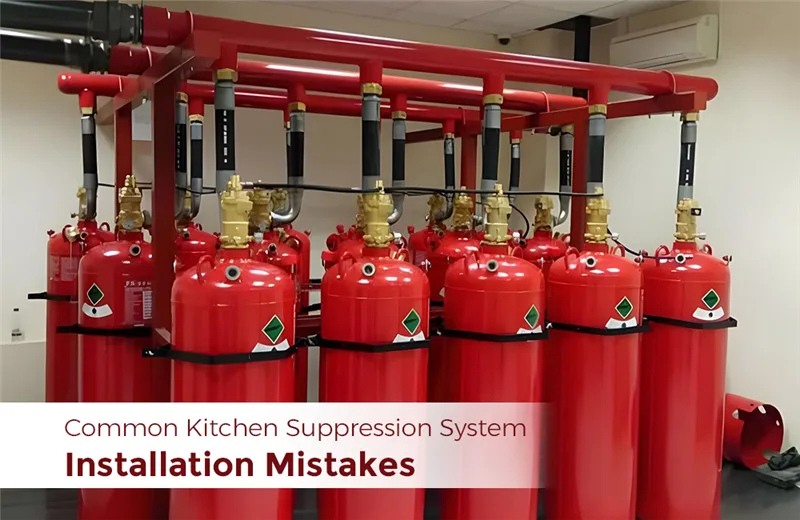
Common Kitchen Suppression System Installation Mistakes

Imagine you are being cooked in a commercial kitchen where food is supposed to be cooked! This happens if a fire accident occurs in a kitchen that lacks a fire suppression system. These systems suppress fire and contain the fire source to prevent fire spreading.   

Proper installation is important because a poorly installed system can fail in an emergency. Most of the cases, installations go wrong due to avoidable mistakes. The blog will discuss common mistakes and how to prevent them.      

Not following the manufacturer guidelines    

Every kitchen suppression system installation comes with specific instructions based on its components and performance standards. Ignoring these guidelines can lead to poor performance or even system failure in an emergency. Different brands or models have unique installation requirements such as nozzle placement, piping configurations, clearance specifications etc. Avoiding these details can compromise the system’s ability to detect and extinguish fires.   

Tip: Always refer to the official installation manual and hire certified professionals who follow the instructions without fail.  

Incorrect nozzle placement     

Incorrect nozzle placement is one of the fire suppression system mistakes. The nozzles are made for high-risk items like stoves, fryers, and grills. These are areas where fires are most likely to start. The system won’t discharge extinguishing agents unless they have been positioned correctly.   

For example, if a nozzle isn’t directly above a deep fryer, it may fail to suppress a spreading grease fire, putting you at serious risk.  

Tip: Always have a professional layout and hazard analysis done before installation to ensure each nozzle is correctly placed for maximum coverage and protection.  

Using incompatible equipment    

Mixing and matching components from different suppression system brands may result in fire suppression system installation issues. It may be convenient or cost-effective, but it’s a serious mistake. Suppression systems are made to work as a complete, integrated unit. Using parts from another brand can disrupt how the system detects fires or releases agents.  

Incompatible components may not trigger properly during an emergency, leaving your kitchen unprotected. Using unauthorized parts can void warranties, violate fire codes, and lead to insurance claim denials in the event of a fire.  

Tip: Always use manufacturer-approved parts and avoid substituting components from different systems.   

Poor maintenance after installation  

Kitchen suppression system installation is just the first step. Regular maintenance is what keeps it working. Unfortunately, many of you may fail to conduct inspections and test the systems or ignore cleaning tasks like clearing grease build-up from the nozzles.  

Poorly maintained systems can have blocked discharge lines, faulty sensors, or expired chemical agents. These make the systems useless in emergency. This is applicable in the case of fire extinguishers too. You should learn how to use a kitchen fire extinguisher and maintain it properly.       

Tip: Set a maintenance schedule and follow it regularly. Keep detailed records of all checks and services.   

Ignoring local fire codes and regulations    

Every city, state, or region has its own fire safety regulations. Kitchen suppression system design, installation, and maintenance also come under these regulations. These local codes ensure systems perform correctly and provide maximum safety in a commercial kitchen environment.  

Ignoring or misunderstanding these regulations can lead to serious consequences. These consequences include heavy fines, forced shutdowns and complete reinstallation of systems. For example, a system that meets national standards might still be non-compliant in your local jurisdiction. This comes under fire suppression system installation issues due to differences in vent hood spacing, appliance coverage, or inspection frequency.  

Tip: Always work with licensed, local professionals who are familiar with the latest fire codes and understand what’s required in your area.  

Inadequate training for kitchen staff    

Even the best kitchen suppression system can fall short if your staff don’t know how to respond when it activates. Inadequate training for kitchen staff also comes under fire suppression system mistakes. Kitchen staff should be trained on how the system works, what happens during activation, and what their role is in that moment. Without training, staff may panic and feel confused about what to do at the time of an emergency. They should know how to evacuate, shut off appliances, and when it’s safe to re-enter the kitchen.  

Tip: Conduct training sessions every month. Include fire drills, explain system components, and walk staff through step-by-step response protocols.  

Kitchen fire suppression systems are important to ensure safety in commercial kitchens. But their effectiveness depends entirely on proper installation, regular maintenance, and trained staff. Common kitchen suppression system installation mistakes are discussed in the blog and are avoidable with the right knowledge and professional support. You can ensure your system performs when it matters most by following manufacturer guidelines, complying with local fire codes, and working with certified experts.  

Safetik is a leading fire fighting company in Kerala, offering the best fire and safety services. With more than 20 years’ experience, we deliver fire safety solutions across industries. Contact us to ensure the safety of your people and property.     

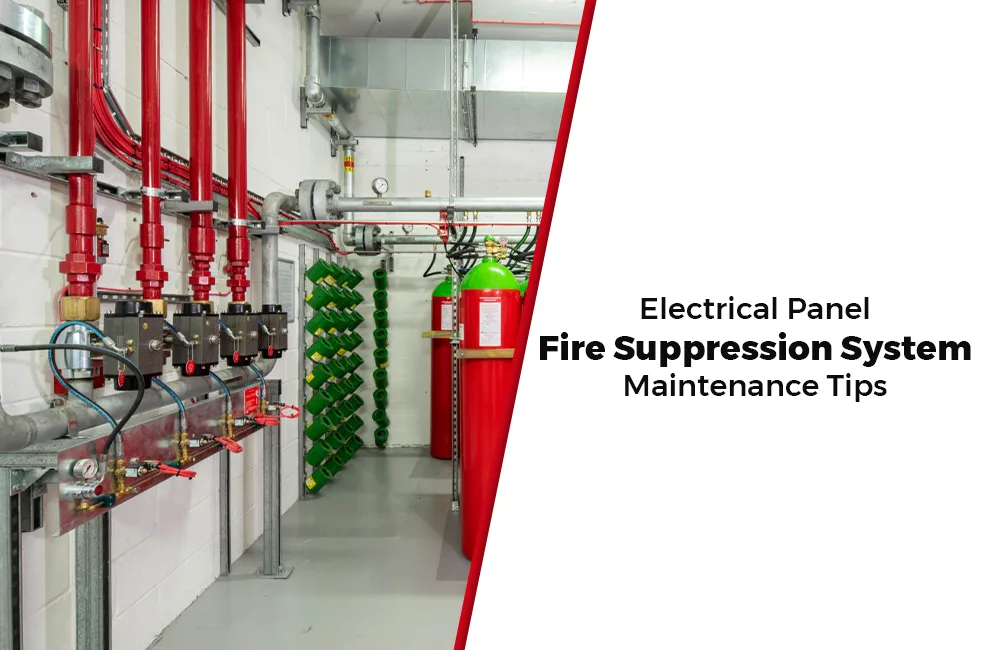
Electrical Panel Fire Suppression System Maintenance Tips

Electrical panels play a crucial role in every building’s power distribution. But if neglected, they can be one of the highest fire risks. Unless you have a fire system in place, a small spark can result in a dangerous electrical fire.  

They prevent or reduce damage, save lives, and promote the efficient operation of businesses. These systems alert people to fires early and suppress them before they become dangerous. 

Electrical panel fire suppression system maintenance is essential to avoiding electrical fires and system malfunctions. By taking care of these problems through periodic inspections and maintenance, facilities can reduce the likelihood of potential risks.  

The blog is intended to offer useful tips for maintenance of electrical panel fire suppression system

Understand your fire suppression system

Let’s begin with the types of fire suppression systems. The primary categories are:  

Clean agent systems: They employ gases such as FM-200 or Novec 1230 for fire extinguishing.  

CO₂ systems: These systems suppress fire by displacing oxygen. They are effective in unoccupied areas like electrical rooms.   

Dry chemical systems: They employ powder-based chemicals such as monoammonium phosphate. These are useful in industrial environments.    

Now let’s move on to the components of a fire suppression system. The main components are detection devices, control panels, actuation mechanisms, nozzles and pipes, alarm and notification devices and pressure & flow sensors.  

Schedule regular inspections      

Having a fire suppression system does not necessarily keep you safe. You need to inspect them from time to time to make sure that they are in good condition. They should be inspected every six months or annually to confirm that they function normally and are safe. The National Fire Protection Association (NFPA) suggests inspections must be performed by a certified technician. 

This inspection assures the state and functionality of all parts of the system like alarms, control panel, sensors etc. 

While inspecting, make sure the fire suppression system is at its intended location and covers the area or equipment to be protected. Ensure manual actuators are readily accessible, unobstructed, and in full working condition.   

Keep the area around the electrical panel clean   

Remove combustible materials such as clutter, debris, and dust. These can cause fires to burn and block entry during emergencies. To avoid overheating caused by the lack of adequate airflow, ventilation is needed. Avoid allowing water to come into contact with the panel to stop short circuits and electric shock hazards.  

Storing items near them may restrict access to the panel, delay emergency response, or become a source of fire if a fault occurs. Combustibles near electrical panels can catch fire quickly if there’s a spark or an overheated component.  

Test alarm and detection components 

Ensure that detection equipment such as smoke alarms, heat detectors, and flame detectors is operational. Check the indicators in the control unit and make sure all panel lights, displays, and fault indicators are correct. Alarm sounders and visual alerts are crucial in an emergency. Reassure that audible alarms and strobe lights will work during an emergency.   

Test the backup batteries and ensure they are in working condition. Check the batteries and replace any weak, expired, or damaged. Don’t forget to log all test dates, results, and corrective actions in a maintenance record. 

Check the suppression agent levels  

For systems that use stored fire suppression agents, verify pressure gauges or measure cylinder weights to ensure agent levels are within an acceptable range. There are chances of leakage, so check for residue, corrosion, or an unexpected drop in pressure. If the levels are low, refill or replace the cylinder immediately. Follow manufacturer or system-specific guidelines for refilling or replacing the suppression agent. Document inspection findings and any corrective actions taken.    

Keep maintenance records   

Keeping records of maintenance helps with audits, compliance and tracking system performance. All inspections, tests, repairs and replacements must be logged including dates, findings, agent levels, parts changed, issues fixed, and service provider details etc. 

These records help ensure compliance with fire safety regulations and insurance requirements. Additionally, maintaining a history of service activities helps to identify recurring issues, anticipate potential failures, and plan preventative maintenance more efficiently.

Train staff or occupants 

Staff or occupant training is an essential part of electrical panel fire suppression system maintenance. All people in the building should know the workings of the fire suppression system and the response if it is triggered. This includes identifying alarm signals and evacuation routes. Periodic fire safety training and emergency drills ensure that individuals can respond well and quickly in the event of an actual occurrence.  

Maintenance of electrical panel fire suppression system is critical to guarantee safety, operational integrity, and meet fire safety standards. A well-maintained system not only minimizes the possibility of failure but can avoid expensive fire damage and, above all, save lives. By staying ahead of routine inspections, testing, and employee training, you make the space safer for all.  

Safetik is the leading fire fighting company in Kerala that offers the best fire and safety services. With more than 20 years’ experience, we have delivered many successful projects across various industries. Don’t wait for a fire accident to take place. Book your next maintenance visit with us today and stay protected. 

Things to consider during the refilling process of fire extinguishers

Fire extinguishers are one of the simplest tools for first fire response; in putting out minor fires so they will not develop into major fires. Regular refilling of fire extinguishers enables them to perform when it is needed most. The blog aims to guide take you through the fire extinguisher refilling requirements.  

The things to consider during the refilling process are: 

Check the parts used  

When being refilled, each part must be checked to know that the unit is in perfect working condition and safe for use. 

Valves: They must be leak-free, crack-free, or free of any type of damage. 

Hose & Nozzle: Obstruction or cracking that may inhibit flow of the extinguishing medium needs to be inspected. 

Pressure Gauge: Inspect that it’s reading within the range indicated and in good working condition. 

Seals and Pins: These safety devices should be unbroken and intact to verify that the extinguisher has not been discharged accidentally.  

Refilling test of fire extinguisher 

An adequate test should be performed prior to refilling a fire extinguisher to verify the structural integrity and safety of the device. Pressure test, or hydrostatic test, is carried out by filling the extinguisher with water or other incompressible fluid and pressurizing it to a certain extent to identify any leaks, bulging, or points of failure. Also inspect the inside of the cylinder for rust, corrosion, or internal damage, which can hinder the safety and effectiveness of the extinguisher. 

Every cylinder has a defined shelf life, which ensures its safety. If a cylinder has reached or exceeded its shelf life, it is not safe to refill and must be taken out of service. Attempting to refill an expired cylinder can cause serious safety risks, including the chance for leaks or explosions. 

Ensure proper handling and storage conditions  

The extinguishers should be placed in upright positions in easily accessible and visible positions. They should be stored in a cool dry place or protected from high temperatures or harmful chemicals, if possible, in the -10°C to 50°C temperature range based on the extinguishing agent. Upon refilling, the experts may utilize the proper personal protective equipment (PPE) of gloves, goggles, and protective devices to confirm that they will be safe from pressurized contents and chemicals. 

Inspect the expiry dates  

Perhaps the most important procedure in the fire extinguisher refilling checklist is checking on the expiry date of the extinguishing agent and of the unit itself. All extinguisher types such as dry powder, foam, CO₂ or wet chemical all have a recommended service or refill period, generally 3 to 5 years based on type and manufacturer recommendation. Don’t forget that even though an extinguisher may have never been used, it should be inspected and serviced regularly. 

Refill with the correct type of agent  

Recharging a fire extinguisher with the right kind of extinguishing agent is necessary because different agents are meant to put out different classes of fire. The wrong agent for the extinguisher can result in improper extinguishing of fire, equipment damage, or even start the fire. Incorrect refilling can cause pressure imbalance, nozzle blockages, or improper spray patterns. 

Verify the weight after refilling  

In refilling a fire extinguisher, one needs to find the final weight to that the right quantity of extinguishing agent has been added. A unit that is underfilled will not discharge enough agent to put out the fire, and an overfilled unit may result in pressure or mechanical failure. 

For weight verification, use a calibrated weight device and compare the reading to the manufacturer’s marked full weight (usually on the body of the extinguisher). 

Test the functionality  

Recharging a fire extinguisher comes with the necessity of conducting a functional test as a precautionary measure to find out whether it will function efficiently in case of emergencies. A functional test ensures issues such as blockage, faulty valves, or leakage are identified prior to reutilization. 

Even though discharge testing to full capacity is not required after every refill, there should be a functional test in routine maintenance, typically once a year or as stipulated by safety legislation and the extinguisher manufacturer. 

Certification and compliance 

It is essential that the refilling of the fire extinguisher process align with local fire safety standards to guarantee security and prevent legal complications. Refilling should always be carried out by professionals who have been trained and certified in understanding BIS standards and can service pressurised systems safely.  

Documentation and record keeping 

Correct and proper documentation is part of the requirement in refilling and maintaining fire extinguishers. Each refill will have to be followed by a full set of records, with the record in the form of a maintenance log, required for regulatory purposes and safety audits. 

A properly kept logbook helps to track the service history of all the extinguishers so that they are inspected and recharged at regular intervals as per standards. It also helps to identify recurring problems, schedule future services, and demonstrate compliance to fire safety inspections by local authorities. 

A fire extinguisher refilling checklist guarantees that all significant steps are followed to ensure maximum safety and compliance. Fire extinguisher maintenance and refilling are the essential things to consider during the refilling process in preventing fire-extinguishing equipment from failing when it is required. A well-maintained extinguisher can save lives by preventing a fire from spreading. 

Safetik provides the finest fire and safety services in Kerala, catering to many industries. With over 20 years of experience, they want to provide good service by being ahead in business. 

Posts pagination

×