
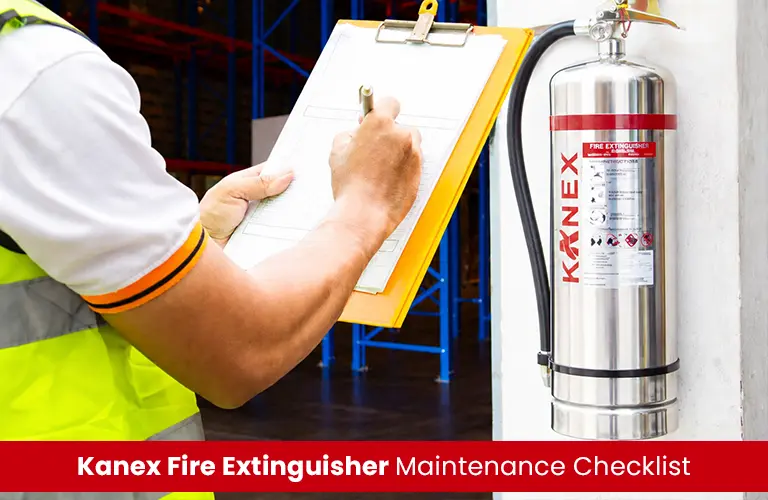
A fire extinguisher is a contingent measure that remains on standby until an emergency arrives, when it’s required to work without fail. Regular inspection and maintenance keep an eye on the extinguisher’s reliable performance in homes, offices, factories, warehouses, hospitals, hotels, and commercial buildings when it matters most.
As a trusted firefighting company in Kerala and an authorized Kanex dealer, Safetik provides high-quality fire extinguishers, timely maintenance, refilling, and other essential fire safety solutions. Through this Kanex fire extinguisher maintenance checklist, readers will gain insight on the essential checks needed to keep your extinguisher safe, accessible, and ready for use.
Why Fire Extinguisher Maintenance Is Important
A tool is only useful if it’s accessible and deployable when needed at most. Similarly, a fire extinguisher is only reliable if it is easily accessed, charged precisely, and conditionally perfect. The benefit of regular inspections lies in its ability to identify small issues before they become serious problems.
- It helps reduce the risk of the extinguisher failing to operate properly during emergencies, even if it’s one of the smallest margins of errors.
- Diligent checks and regulatory maintenances help ensure total compliance with workplace and fire safety regulations.
- Extends the lifespan and operationality of the extinguisher.
- Trims down potential costs arising from avoidable replacement and repair costs by identifying problems early and taking actions appropriately.
Kanex Fire Extinguisher Maintenance Checklist
Check the Pressure Gauge
- Always ensure the pressure gauge is working without any issues, because it indicates whether the extinguisher is effectively functional.
- Make sure the needle is within the green zone, which is often understood as the optimal range for the extinguisher’s internal pressure to spray its contents.
- If the pressure is low or high, the needle will move away from the green zone, over to the red.
- A low-pressure red means that the tool is not pressured enough for ideal spraying conditions, whereas a high-pressure red warns of potential rupturing.
Inspect for Physical Damage
- Examine the tool carefully and look for any dents, rust, corrosion, or cracks on its surface or components.
- Make sure there is no leakage or damaged parts that could inflict danger to the user or fail the extinguisher’s functionality during emergencies.
Verify the Safety Pin and Seal
- Make sure the safety pin is fitted in properly and the tamper seal is intact.
- A broken or absent seal reveals the status of the extinguisher – a chance that it has been used before.
- Ensure to have it checked and replaced by a proper fire and safety professional.
Read the Inspection Tag
- Check the inspection or service tag to confirm when the extinguisher was last inspected or serviced.
- Keeping inspection records up to date makes it easier to identify when the next professional service is due.
Check the Hose and Nozzle
- The hose and nozzle should be in perfect condition to let the contents discharge effectively.
- Examine the hose and nozzle for leakages or blockages, as it could affect the effectiveness of the extinguisher during operation.
- Inspect them to identify cracks or wear and replace them with a safer one.
Ensure the Label Is Clear
- Make sure to check whether the instructions and labels are easily readable and understandable.
- If these informative labels or instructions ever become faded, damaged, or unclear, replace them immediately with new ones.
- These are extremely pivotal to guide people by making informed and educated decisions without panic during a fire emergency and avoid potential mishandling.
Confirm Easy Accessibility
- An extinguisher should be clearly visible, easily accessible, and located at an ideal spot that’s both appropriate and within range of use.
- Do not place boxes, furniture, stock, or equipment in front of it – or any obstructions to where it is placed.
- Mount it properly and securely at the location as specified in the fire safety plan.
Clean the Fire Extinguisher
- Remove dust, dirt, and any contaminants that prevent the proper functioning of the extinguisher.
- Keeping the cylinder clean makes defects easier to identify while effectively tackling the issue of corrosion.
- Avoid any methods of cleaning that could potentially harm or damage the labels, valves, or other components of the fire extinguisher.
Check the Expiry or Service Date
- Be aware of your tool’s expiry date and when the maintenance service is due.
- Know that extinguishers are to be maintained in accordance with the manufacturer’s instructions and industry standards.
- Refrain from making self-induced assumptions like assuming the quality of an extinguisher just because it appears new.
Schedule Professional Maintenance
- Mere visual checking is not an alternative for annual servicing by qualified technicians. Make sure to schedule regular maintenance by professionals.
- Hydrostatic testing or additional examinations would be helpful, according to the type, age, condition, and applicable requirements of the fire extinguisher.
Common Mistakes to Avoid
Even good maintenance routines could become worthless if basic warning signals are not heeded and overlooked without further checking. That’s why it’s important to avoid these mistakes –
- Any abnormalities or lowering in the pressure reading being ignored carelessly.
- Blocking access to the extinguisher and making it incapable of easy use.
- Overlooking annual inspections and servicing.
- Continuing the usage of extinguishers that are either expired or requires replacement.
- Failing to service and repair damaged components of the tool, such as its seals, hoses, and pressure gauge.
Conclusion
Understanding why a Kanex Fire Extinguisher Maintenance Checklist is necessary is very important to implement responsible fire safety management. A monthly visual inspection by safety professional, along with timely professional servicing, can make sure your extinguisher is operational and emergency ready. Not to mention the fact that it extends the service life of the tool and prevents any scope for malfunctioning.
Those trying to understand how to maintain Kanex fire extinguisher can start by checking the boxes mentioned above and ensure proper adherence to the instructions provided by the manufacturer for your model.
At Safetik, we provide reliable fire safety solutions, by ensuring easy access for users to purchase fire and safety products, including options to buy fire extinguishers in Kerala. In essence, upkeeping a routine to choose the right equipment and maintaining it properly is more integral than considering it only after the advent of an emergency.