
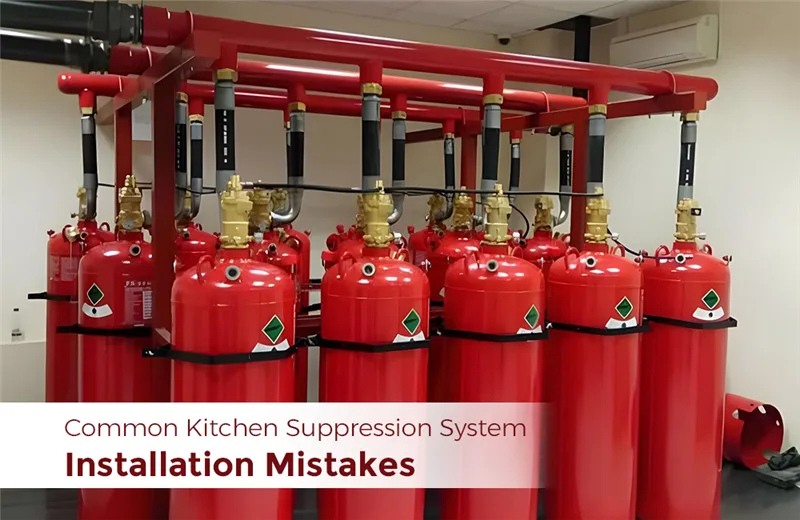
Common Kitchen Suppression System Installation Mistakes

Imagine you are being cooked in a commercial kitchen where food is supposed to be cooked! This happens if a fire accident occurs in a kitchen that lacks a fire suppression system. These systems suppress fire and contain the fire source to prevent fire spreading.   

Proper installation is important because a poorly installed system can fail in an emergency. Most of the cases, installations go wrong due to avoidable mistakes. The blog will discuss common mistakes and how to prevent them.      

Not following the manufacturer guidelines    

Every kitchen suppression system installation comes with specific instructions based on its components and performance standards. Ignoring these guidelines can lead to poor performance or even system failure in an emergency. Different brands or models have unique installation requirements such as nozzle placement, piping configurations, clearance specifications etc. Avoiding these details can compromise the system’s ability to detect and extinguish fires.   

Tip: Always refer to the official installation manual and hire certified professionals who follow the instructions without fail.  

Incorrect nozzle placement     

Incorrect nozzle placement is one of the fire suppression system mistakes. The nozzles are made for high-risk items like stoves, fryers, and grills. These are areas where fires are most likely to start. The system won’t discharge extinguishing agents unless they have been positioned correctly.   

For example, if a nozzle isn’t directly above a deep fryer, it may fail to suppress a spreading grease fire, putting you at serious risk.  

Tip: Always have a professional layout and hazard analysis done before installation to ensure each nozzle is correctly placed for maximum coverage and protection.  

Using incompatible equipment    

Mixing and matching components from different suppression system brands may result in fire suppression system installation issues. It may be convenient or cost-effective, but it’s a serious mistake. Suppression systems are made to work as a complete, integrated unit. Using parts from another brand can disrupt how the system detects fires or releases agents.  

Incompatible components may not trigger properly during an emergency, leaving your kitchen unprotected. Using unauthorized parts can void warranties, violate fire codes, and lead to insurance claim denials in the event of a fire.  

Tip: Always use manufacturer-approved parts and avoid substituting components from different systems.   

Poor maintenance after installation  

Kitchen suppression system installation is just the first step. Regular maintenance is what keeps it working. Unfortunately, many of you may fail to conduct inspections and test the systems or ignore cleaning tasks like clearing grease build-up from the nozzles.  

Poorly maintained systems can have blocked discharge lines, faulty sensors, or expired chemical agents. These make the systems useless in emergency. This is applicable in the case of fire extinguishers too. You should learn how to use a kitchen fire extinguisher and maintain it properly.       

Tip: Set a maintenance schedule and follow it regularly. Keep detailed records of all checks and services.   

Ignoring local fire codes and regulations    

Every city, state, or region has its own fire safety regulations. Kitchen suppression system design, installation, and maintenance also come under these regulations. These local codes ensure systems perform correctly and provide maximum safety in a commercial kitchen environment.  

Ignoring or misunderstanding these regulations can lead to serious consequences. These consequences include heavy fines, forced shutdowns and complete reinstallation of systems. For example, a system that meets national standards might still be non-compliant in your local jurisdiction. This comes under fire suppression system installation issues due to differences in vent hood spacing, appliance coverage, or inspection frequency.  

Tip: Always work with licensed, local professionals who are familiar with the latest fire codes and understand what’s required in your area.  

Inadequate training for kitchen staff    

Even the best kitchen suppression system can fall short if your staff don’t know how to respond when it activates. Inadequate training for kitchen staff also comes under fire suppression system mistakes. Kitchen staff should be trained on how the system works, what happens during activation, and what their role is in that moment. Without training, staff may panic and feel confused about what to do at the time of an emergency. They should know how to evacuate, shut off appliances, and when it’s safe to re-enter the kitchen.  

Tip: Conduct training sessions every month. Include fire drills, explain system components, and walk staff through step-by-step response protocols.  

Kitchen fire suppression systems are important to ensure safety in commercial kitchens. But their effectiveness depends entirely on proper installation, regular maintenance, and trained staff. Common kitchen suppression system installation mistakes are discussed in the blog and are avoidable with the right knowledge and professional support. You can ensure your system performs when it matters most by following manufacturer guidelines, complying with local fire codes, and working with certified experts.  

Safetik is a leading fire fighting company in Kerala, offering the best fire and safety services. With more than 20 years’ experience, we deliver fire safety solutions across industries. Contact us to ensure the safety of your people and property.     
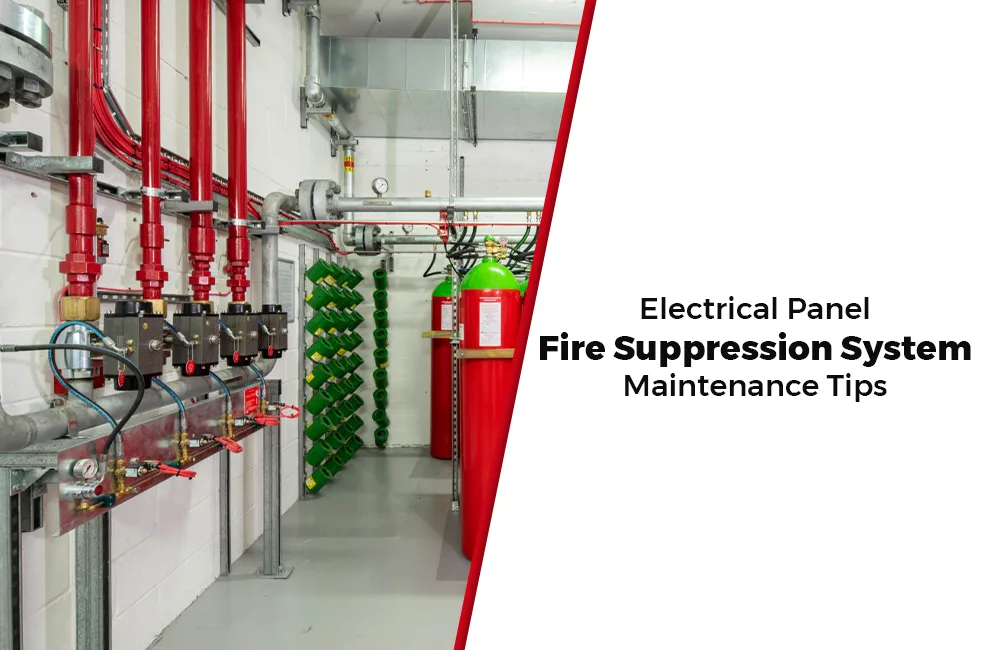
Electrical Panel Fire Suppression System Maintenance Tips

Electrical panels play a crucial role in every building’s power distribution. But if neglected, they can be one of the highest fire risks. Unless you have a fire system in place, a small spark can result in a dangerous electrical fire.  

They prevent or reduce damage, save lives, and promote the efficient operation of businesses. These systems alert people to fires early and suppress them before they become dangerous. 

Electrical panel fire suppression system maintenance is essential to avoiding electrical fires and system malfunctions. By taking care of these problems through periodic inspections and maintenance, facilities can reduce the likelihood of potential risks.  

The blog is intended to offer useful tips for maintenance of electrical panel fire suppression system

Understand your fire suppression system

Let’s begin with the types of fire suppression systems. The primary categories are:  

Clean agent systems: They employ gases such as FM-200 or Novec 1230 for fire extinguishing.  

CO₂ systems: These systems suppress fire by displacing oxygen. They are effective in unoccupied areas like electrical rooms.   

Dry chemical systems: They employ powder-based chemicals such as monoammonium phosphate. These are useful in industrial environments.    

Now let’s move on to the components of a fire suppression system. The main components are detection devices, control panels, actuation mechanisms, nozzles and pipes, alarm and notification devices and pressure & flow sensors.  

Schedule regular inspections      

Having a fire suppression system does not necessarily keep you safe. You need to inspect them from time to time to make sure that they are in good condition. They should be inspected every six months or annually to confirm that they function normally and are safe. The National Fire Protection Association (NFPA) suggests inspections must be performed by a certified technician. 

This inspection assures the state and functionality of all parts of the system like alarms, control panel, sensors etc. 

While inspecting, make sure the fire suppression system is at its intended location and covers the area or equipment to be protected. Ensure manual actuators are readily accessible, unobstructed, and in full working condition.   

Keep the area around the electrical panel clean   

Remove combustible materials such as clutter, debris, and dust. These can cause fires to burn and block entry during emergencies. To avoid overheating caused by the lack of adequate airflow, ventilation is needed. Avoid allowing water to come into contact with the panel to stop short circuits and electric shock hazards.  

Storing items near them may restrict access to the panel, delay emergency response, or become a source of fire if a fault occurs. Combustibles near electrical panels can catch fire quickly if there’s a spark or an overheated component.  

Test alarm and detection components 

Ensure that detection equipment such as smoke alarms, heat detectors, and flame detectors is operational. Check the indicators in the control unit and make sure all panel lights, displays, and fault indicators are correct. Alarm sounders and visual alerts are crucial in an emergency. Reassure that audible alarms and strobe lights will work during an emergency.   

Test the backup batteries and ensure they are in working condition. Check the batteries and replace any weak, expired, or damaged. Don’t forget to log all test dates, results, and corrective actions in a maintenance record. 

Check the suppression agent levels  

For systems that use stored fire suppression agents, verify pressure gauges or measure cylinder weights to ensure agent levels are within an acceptable range. There are chances of leakage, so check for residue, corrosion, or an unexpected drop in pressure. If the levels are low, refill or replace the cylinder immediately. Follow manufacturer or system-specific guidelines for refilling or replacing the suppression agent. Document inspection findings and any corrective actions taken.    

Keep maintenance records   

Keeping records of maintenance helps with audits, compliance and tracking system performance. All inspections, tests, repairs and replacements must be logged including dates, findings, agent levels, parts changed, issues fixed, and service provider details etc. 

These records help ensure compliance with fire safety regulations and insurance requirements. Additionally, maintaining a history of service activities helps to identify recurring issues, anticipate potential failures, and plan preventative maintenance more efficiently.

Train staff or occupants 

Staff or occupant training is an essential part of electrical panel fire suppression system maintenance. All people in the building should know the workings of the fire suppression system and the response if it is triggered. This includes identifying alarm signals and evacuation routes. Periodic fire safety training and emergency drills ensure that individuals can respond well and quickly in the event of an actual occurrence.  

Maintenance of electrical panel fire suppression system is critical to guarantee safety, operational integrity, and meet fire safety standards. A well-maintained system not only minimizes the possibility of failure but can avoid expensive fire damage and, above all, save lives. By staying ahead of routine inspections, testing, and employee training, you make the space safer for all.  

Safetik is the leading fire fighting company in Kerala that offers the best fire and safety services. With more than 20 years’ experience, we have delivered many successful projects across various industries. Don’t wait for a fire accident to take place. Book your next maintenance visit with us today and stay protected. 

×